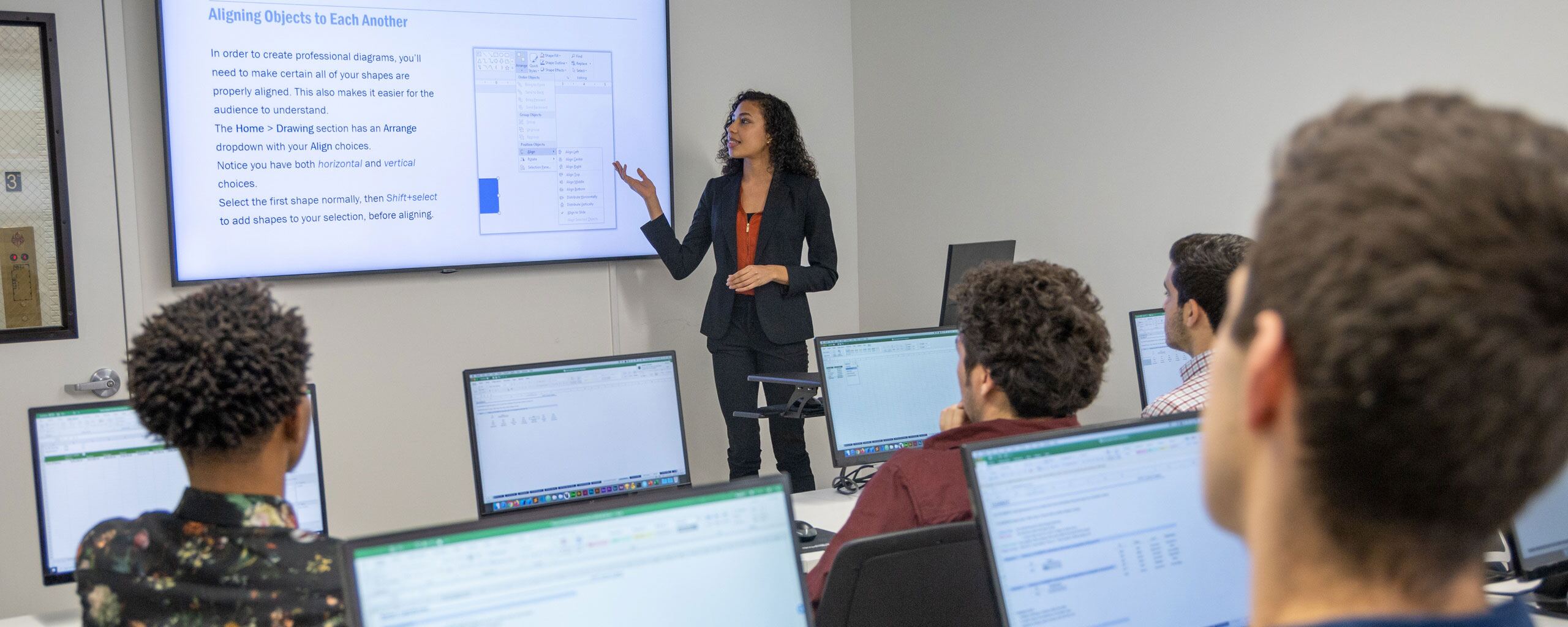
Learn More About Adobe Classes in Washington, D.C.
First introduced in 1982, the Adobe Creative Cloud quickly became one of the most beloved software families for designers. You’re likely already familiar with Photoshop (by name, if not in practice), but Adobe tools like Illustrator, InDesign, After Effects, and Premiere Pro are just as popular among today’s design professionals. Together, these tools boasted 30 million subscribers in 2023.
This immense popularity is only fitting in light of the many versatile features these tools contain. In addition to editing images, you can use Adobe Creative Cloud tools for various creative tasks, including video production, web design, illustration, and sound design. What’s more, every Adobe app is compatible with the others, allowing you to seamlessly transition between tools when working on multimedia designs.
What Can You Do With Adobe Training?
Adobe proficiency will enable you to create immaculate designs of many kinds. There are more than 20 Adobe Creative Cloud apps, each bearing distinctive strengths that are useful for different projects.
Adobe will allow you to create the following:
- Graphic designs.
- Digital illustrations and art.
- Websites and other digital interfaces.
- Audio projects and sound effects.
- Print layouts (popularly used for magazines and stationery design).
- Video projects.
- Motion graphics.
Designs created digitally can also be transformed into physical results such as stickers, stationery, t-shirts, business cards, and product packaging.
What Will I Learn in an Adobe Class?
There are many different types of Adobe classes, with some covering just one app and others covering multiple tools in the context of a skill set like graphic design. This variation among classes means that what you learn will likely be unique to the particular class you choose. In addition to software proficiency, the most frequent skills taught in Adobe classes are image editing, graphic design, motion graphics, video editing, user interface (UI) design, and user experience (UX) design.
Image Editing
Popular in fields like photography and marketing, image editing involves manipulating an existing image with a tool like Photoshop. While editing an image, a Designer may change subtle elements such as color and lighting, or make drastic changes like:
- Removing background elements.
- Adding new features or effects.
- Altering textures (such as bumpy skin).
- Crop or broaden the image frame.
Graphic Design
While graphic design is sometimes mistaken for image editing, the two skills are not the same. Image editing is performed on a pre-existing image, while graphic design generates brand-new images from scratch. These graphics are made up of quintessentials like color, shape, pattern, and text, and are most commonly created with Illustrator, Photoshop, and InDesign. In a graphic design course, you may also learn principles from design theory that can make your designs more persuasive.
Motion Graphics
Graphic designs can be combined with motion, special effects, and audio to produce simple animations known as motion graphics. Created from a series of static images, motion graphics are much more rudimentary than traditional animation, which consists of numerous moving images. You may see motion graphics on dynamic websites, as well as in video media and games. In addition to coding, three-dimensionality, and storytelling, proficiency with Adobe tools like Premiere Pro, After Effects, Illustrator, and Photoshop can be put to use in motion graphics design.
Video Editing
Similar to image editing, video editing involves changing existing media rather than creating it from nothing. Intending to create a more cohesive and compelling video narrative, Video Editors use Adobe tools to cut and rearrange footage before making adjustments to color, sound, and lighting. From there, it’s about adding special effects and audio. The most popular video editing tools in the Adobe Creative Cloud include Premiere Pro, After Effects, and Audition.
UX Design and UI Design
While the other skills listed here involve static designs that people view, UX and UI design take on the ambitious challenge of creating designs that people can interact with. You’ve likely interacted with one of these designs in the form of a dynamic website, social media app, game menu, or software. Creating these types of user interfaces involves many different skills, including prototyping with software such as Adobe XD.
How Hard Is It to Learn Adobe?
Most new learners agree that exploring Adobe can be exciting, but your learning process will be unique to you (that means your particular strengths and goals). Experts will tell you that getting comfortable with Adobe tools at an amateur level isn’t too hard, but point out that it may take much more dedication to reach the professional level.
What Are the Most Challenging Parts of Learning Adobe?
Adobe apps typically utilize a myriad of features and layers to create a completed design. These details can be difficult to keep straight when you’re new to Adobe, but with dedicated practice, you’ll gain a muscle-memory-like understanding of these tools that will make things easier. In a similar vein, you might also look at the 20+ apps in Adobe Creative Cloud and struggle to decide what to learn first. For the most part, it doesn’t really matter, but your safe bet (if you need one) is going to be Photoshop.
How Long Does It Take to Learn Adobe?
Many factors can alter how fast you learn Adobe, but if you’re like most people, you’ll feel comfortable at the three-month mark. If you plan to master Adobe skills at the career level, you should plan to commit up to a year to learning. While a year is standard, you may need more time if you plan to learn many Adobe tools or don’t have prior design experience.
Should I Learn Adobe in Person or Online?
Everyone has unique learning needs, and you may discover that yours are met more adequately by one training format than another. Both online and in-person training provide high-quality experiences with plenty of benefits that are worth taking advantage of. To find which works best for you, compare the pros and cons of each training style below.
In-person classes:
- Offer face-to-face interaction with easy access to instructor support.
- Provide a highly social experience.
- Require scheduled time commitments.
- May demand more time and energy for commuting to a physical location.
Live online classes:
- Use digital software like Zoom to offer real-time interaction similar to in-person classes (including instructor support).
- Provide the flexibility to learn from home.
- Don’t necessitate commutes, but do require scheduled time commitments.
On-demand (or asynchronous) online classes:
- Don’t provide live instruction or feedback.
- Supply pre-prepared study materials that you can explore at your own pace.
- Usually only cover beginner topics.
- Offer the most flexibility in terms of where and when you learn.
What Should I Learn Alongside Adobe?
With so many uses for Adobe tools, many skills can complement your app skills. Experts advise choosing complementary skills according to what you plan to do with your new skills. If, for instance, you hope to become a Web Designer, you’ll discover that basic coding skills can help you communicate more effectively with IT professionals. Alternatively, you might be a Web Designer who wants to climb your career ladder. In this case, adding project management skills can qualify you for more responsibility.
Skills that complement Adobe well include:
- Applied design theory.
- Coding.
- Digital Design.
- Drawing or Illustration.
- Fashion Design.
- Graphic Design.
- Microsoft Office.
- Motion Graphics.
- Photo Editing.
- Photography.
- Project Management.
- Video Editing.
- Videography.
- UX/UI Design.
- Web Design.
- Web Development.
- SEO and Digital Marketing.
- Soft skills like communication, creative problem-solving, and adaptability.
Washington, D.C. Industries That Use Adobe
As a toolset with many applications, Adobe is an accessory to many different jobs and industries. In addition to being popular in the design industry proper, these tools also make regular appearances in fields like information technology, business, marketing, and medicine, where they are in constant high demand.
Design
The design industry is perhaps the most obvious place for Adobe users to sell their services, as Adobe is used in practically every professional design role. Though design isn’t Houston’s largest industry, this field still plays an important role in the local community. Dedicated to this purpose, the Houston Design District features local design businesses ranging from classy design showrooms and interior design companies to fabric stores, wallpaper sellers, and full-blown architectural studios.
Digital Technology
Technology is an important part of Houston’s economy, producing $1.6 billion per year across more than 9,000 companies. In addition to serving as a base for major organizations like NASA, Houston’s tech industry also supplies technology for companies like Amazon, Microsoft, IBM, and Oracle. Adobe-proficient workers support the tech industry by creating digital interfaces, graphics, and marketing materials for tech initiatives.
Business and Marketing
Houston is self-dubbed the “headquarters capital” of America, drawing attention to its status as the densest collection of corporate headquarters in the nation. In addition to 26 Fortune 500 company headquarters, the city also houses more than 175,000 other businesses. No matter what they’re selling, these businesses share one thing in common: they all need Adobe. With competition for customers peaking across the city, graphics, digital advertisements, and websites are some of the best ways for businesses to stand out.
Medicine and Life Sciences
It may seem unexpected, but Adobe tools are also crucial to the healthcare industry. Adobe Creative Cloud tools are often used to help produce more user-friendly apps and websites, create medical brochures, and edit PDF files. Combined with education, healthcare is considered Houston’s largest industry, with roughly 15,600 workers and an annual growth rate of 4%. The city’s 1,100+ life science facilities and 25 research centers regularly contribute toward developments in biotechnology, gene therapy, cell therapy, and molecular diagnostics.
Adobe Job Titles and Salaries in Washington, D.C.
When compared to more historic art fields (such as poetry, sculpture, or painting), design jobs that utilize digital technology (like Adobe) pay top dollar. To put this into perspective, Houston-based traditional artists only earn about $48,000 per year (much less than the average American), while Designers with Adobe skills earn salaries in the range of $65,000 to $103,000. Because many designers specialize in a niche, however, these numbers can vary a bit.
Graphic Designer
Graphic Designers produce images designed to convey sophisticated emotional messages. Salaries for Graphic Designers living in Houston usually range between $47,000 and $85,000 per year.
Digital Designer
There are many different types of Digital Designers, with specialty job titles including UI Designer, UX Designer, and Web Designer. Though each specialization focuses on unique segments of the design process, all Digital Designers share the goal of producing dynamic user interfaces (which may include websites and apps). In Houston, Digital Designer salaries fall between $57,000 and $136,000, roughly 23% more than those of most other occupations.
Motion Graphics Designer
Also known as Motion Designers, Motion Graphics Designers create simple animations for projects involving video, gaming, and web design. In the Houston area, Motion Graphics Designers can anticipate salaries in the range of $63,000 to $85,000 per year.
Design Director
While workers in most industries earn roughly $65,000 per year, Design Directors earn much higher wages (averaging $110,000 to $127,000 each year). Adobe proficient designers who take the time to gain experience with project management can qualify for this senior position.
Adobe Classes from Noble Desktop
Ready to start your design training journey? Houston has a sundry array of Adobe courses, with options for learning online as well as in-person. In addition to specifying the length of your course (full-time, part-time, or short workshop), you can choose from a variety of topics. While some classes explore beginner skills in just one app, others cover multiple apps along with other job-specific skills to help you start your career.
Noble Desktop is one of Houston’s best-kept secrets for all things design training and offers classes covering individual Adobe tools as well as immersive training programs aimed at aspiring professionals. In the latter category, the Graphic Design Certificate is a live online course that covers the comprehensive range of tools and skills you’ll need to start your career as a Graphic Designer (including Adobe). Centered around hands-on learning, this course is full of assignments that will help you learn skills, acquire experience, and compile a portfolio. By working one-on-one with an industry expert, you’ll also have additional opportunities to improve upon what you learn in class. Thanks to the school’s career support services, you won’t be left on your own when you graduate but will have a host of resources at your disposal.
Want to land a job in the video production industry? Noble Desktop also has a Video Editing and Motion Graphics Certificate that covers the most cutting-edge tools, from Premiere Pro, After Effects, and Cinema 4D to Adobe Audition and Photoshop. Like all Noble Desktop courses, this comprehensive class takes a practical approach to learning. Rather than listening to a lecture or completing simple assignments that you’ll never look at again, you’ll master video production by creating a professional-grade demo reel that you can use to get a job. In one-on-one mentorship meetings, you’ll have the chance to receive feedback that can improve your demo reel even further.
Adobe Corporate Training
For a creative way to bring professional design into your company, consider providing employees with sponsored Adobe training. Noble Desktop’s onsite and corporate Adobe training programs can bring experts right to your company’s doors or even provide host training online.
As an alternative, Noble Desktop also offers discounted group vouchers that let your employees take classes independently. In addition to giving them more freedom to choose how they learn, this option also has the potential to free up more time during the workday. To get more details about Adobe corporate training or group discounts, send Noble Desktop a brief email at corporate@nobledesktop.com.
Learn From Noble Desktop’s Experienced Adobe Instructors in Washington, D.C.
As the nation’s capital, Washington, D.C., is a hub for government, public service, and major organizations, which means there’s ample opportunity for professional development. If you’re looking to expand your knowledge in the field of tech, data, business, or design, you can explore training options available to both individuals and federal professionals. Classes are right in the heart of the city, offering knowledgeable instructors with decades of combined training and a wide range of specializations. From their real-world experience in the field, these instructors provide valuable insights that help students get comfortable while learning the material. Not to mention, the skills they develop in the classroom are practical and transferable, meaning students can put their newfound knowledge right to work.
Training with Noble Desktop’s team is easy with the modern facilities located at 600 Maryland Avenue SW, Washington, D.C., 20024. It’s mere steps away from L’Enfant Plaza and offers an array of benefits, like a professional yet welcoming environment and a modern workspace. Getting there from anywhere in D.C. is straightforward, whether by Metro, bus, or car. L’Enfant Plaza is served by multiple Metro lines, and there are several bus routes that stop nearby. Those driving can also access parking garages that are easily within walking distance.
Adobe’s Creative Suite powers design, media, and communication projects throughout the D.C. region. With this, the instructors at Noble Desktop teach essential workflows in apps like Photoshop, Illustrator, and InDesign, helping students build practical creative skills for real-world projects. Learning at this school also offers a wide range of professional development opportunities, with classes led by expert instructors who can help you acquire skills that get you ready for the real world.
Brian Simms
Brian is an educator and training leader passionate about helping professionals grow in fields like project management and AI. He designs adaptive learning programs that combine instructor-led sessions, live online experiences, and self-paced study, making training practical and within reach for anyone. Brian’s work also centers heavily around AI integration, particularly in training situations to show organizations how easy it can be applied to the workplace, showing ways to tackle real-world problems, enhance leadership, streamline projects, and support better decision-making. Beyond teaching, he has also developed curricula and led training on a massive scale. Brian’s blend of talents and interests makes him well-positioned to train others and help them navigate the complexities of the subject matter.
Clarissa Corbin
With more than 25 years of experience, Clarissa is a seasoned corporate trainer, Project Manager, and Business Consultant and has helped professionals and organizations alike achieve tangible results around the world. Her work has taken her to amazing places around the world, from China to Africa, training over 10,000 participants in leadership, project management, business analysis, and emerging technologies. Clarissa has worked with teams at NASA, Microsoft, Citibank, and FEMA, just to name a few, and is known for designing interactive yet practical sessions where her listeners can apply their skills immediately. At Graduate School USA, she played a pivotal role and contributed to numerous programs, including the Managing for Results course. She’s a quality instructor, focusing on subjects like project management, AI, and even Adobe, and has a heavy commitment to professionalism, innovation, and student success.
Michelle Proctor
Michele’s professional record in Human Resources, organizational development, and leadership training has been acquired over 25 years in the field. She is a Business Strategist and HR innovator who has helped public, private, federal, and higher education organizations on their path to success. In particular, Michele excels in organizational assessment, project and performance management, workforce development, change management, conflict resolution, and AI initiatives. She prides herself on guiding individuals to leverage their strengths while fulfilling their professional lives. Her consulting work includes leading the DC Courts HR Division’s Five-Year Strategic Plan and Workforce Development Program, “Fulfilling Our Future.” She’s also held senior executive positions at Howard University, the Air Line Pilots Association, and Executive Transitions International. She’s currently working as an adjunct faculty at Graduate School USA and Anne Arundel Community College.
Alan Zucker
Alan Zucker brings real-world expertise from both the federal government and Fortune 100 companies to the classroom. With more than 25 years of professional work in project management, he makes for an ideal instructor. He has managed the project execution organization of 175 professionals, led high-visibility strategic initiatives, and delivered thousands of successful projects. His education began at George Washington University, where he earned his Bachelor’s, before progressing to earn a Master's in Economics from the University of Maryland. Moreover, he holds a wide variety of certifications, such as the Project Management Professional Certification (PMP), PMI-ACP, Disciplined Agile Coach, SAFe Program Consultant, Certified Scrum Professional, and Agile Leadership Academy Trainer. Alan is an active member of the project management community, having served as a keynote speaker, frequent industry commentator, and author of nearly 150 articles on project management.
Tashea Coates
Tashea is a Human Resources Executive and Federal Consultant, holding over 23 years of experience across multiple federal agencies, including the Departments of Homeland Security, Justice, Treasury, State, and Health and Human Services. Known for her ability to strategize and take the lead, Tahsea has transformed HR policies to align with mission strategies and outcomes, influencing government-wide procedures such as onboarding and pay equity. Tashea is a staunch advocate for ethical leadership, inclusivity, and organizational success. In addition, she prides herself on her authenticity and purpose-driven spirit, which translates into her work as an educator as well. In addition to teaching subjects like AI. She’s an author and entrepreneur, and is always looking for ways to help organizations and individuals alike.
Charles Byrd
With a strong foundation in federal human resources management and legal counseling, Charles is a highly knowledgeable Employee and Labor Relations Consultant in Washington, D.C. He began his education at Loyola University, earning his B.A. in Business Administration and Political Science, before graduating from the University of Baltimore School of Law. Throughout his career, Charles has guided agencies through complex HR and labor-related challenges, managed HR programs, and represented organizations in legal proceedings. He has also designed and delivered specialized training in human resources, project management, and marketing. Charles’ professional background has led to numerous accolades and awards, showcasing his impact in the field.
David E. McCullin
Dr. David E. McCullin, better known as Dr. Mac, specializes in strategic communication, homeland security, data analytics, and accurate decision-making. Prior to his work at Graduate School USA, Dr. Mac obtained his Bachelor’s in Engineering, his Master’s in National Security and Strategic Studies, and a Doctorate in Management of Complex Adaptive Systems. He served 24 years in the U.S. Army, including 13 in Special Operations. He later worked at the Department of Homeland Security as an Intelligence and Infrastructure Security Analyst for nearly a decade. Through his education and solid professional career, he has been able to teach students a variety of important skills and has also developed innovative learning tools and games that help improve decision-making and analytical thinking skills.
Natalya Bah
As a part-time instructor at Graduate School USA for over 15 years, Natalya’s expertise cannot go unnoticed. She’s an educator and has developed curricula for the school, including the Change Management Workshops and several project management courses. Not to mention, she’s also served as a learning coach, facilitator, and instructor for government leadership programs and has developed the Define and Achieve Your Goals Process. Natalya earned her Master’s in Project Management and her Project Management Professional (PMP) Certification, making her a well-qualified and effective educator, project manager, coach, and consultant.
Alan McCain
Alan is a retired combat veteran of the U.S. Air Force and Navy with over 30 years of experience in federal and commercial budgeting, auditing, programming, operations, supply chain management, and IT acquisitions. He holds an MBA from George Washington University and a Teaching Certification from Harvard’s Bok Center for Teaching and Learning. Throughout his career across federal, state, and local government agencies, Alan has worked for numerous departments, such as the Department of State and Defense, as well as the Office of the Mayor of D.C. Alan is also an accomplished consultant and business strategist, having aided in the development of organizational projects at Lockheed Martin and PwC, to name a few. His background and lengthy career make him an ideal instructor for those looking to learn more about finance, accounting, and project management.
Derk Mattocks
As a skilled instructor and business leader, Derk Mattocks possesses the skills and career experience to bolster his credibility. He gained his B.S. in Organization Management from Nyack College and his Master’s in Leadership and Military Installation Management, as well as an MBA in Financial Management and Analysis from the University of Maryland. He is a licensed Certified Advanced Professional Business Coach and trained mediator, with the certification to facilitate the “Five Practices of Leadership” workshops. Derk has also served as a Senior Advisor and Instructor for the U.S. Army. Overall, he has the credentials to serve as an accomplished and well-versed instructor, often covering topics related to project management and marketing.
Melanie Dooley
Melanie is a federal acquisition and contracting expert with over 30 years of professional experience in Washington, D.C., spanning both government and education sectors. She has served as the Vice President of Acquisition Policy at SAIC and as the Managing Editor of the Federal Contracts Report at Bloomberg BNA. She’s currently an instructor at Graduate School USA, often teaching classes related to the marketing realm. She’s a Certified Professional Contracts Manager (CPCM) and a Fellow of the National Contract Management Association, positioning her as a person with incredible leadership skills and knowledge of her field. She earned her MBA from Georgetown University and is known as a clear, trusted instructor who consistently challenges students to take their skills to the next level.