Explore Video Editing Classes Near You & Online
With the prevalence of smartphone technology, everyone has become a pocket videographer, recording everything from mundane everyday routines to ill-advised stunts to news-making incidents in footage that captures abuse of power that ends up going viral and shutting down the internet or creating headlines. With the convenience of being able to record anything readily available for anyone, many people have discovered a passion that they can develop into a talent.
For individuals who are considering careers related to working with videos, professional training for learning video editing and production can help in qualifying them for work in film, television, or independent production work in developing and shaping visual content. Skills for handling video content can lead to a career in TV, movies, or streaming online, where people can apply their passions and talents for combining video, graphics, and audio into contributing to professional-looking videos for broadcasting, websites, or social media. People living anywhere can find training to learn basic visual formatting concepts that include frame rates, video resolution, and aspect ratios for importing and organizing various types of visual media.
Video editing particularly involves working with video by arranging content into a coherent package. Video editing is a technical skill that requires video editors to manipulate visual footage, insert and remove audio, digitally add or remove effects and objects, and set continuity from shot to shot to help viewers make sense of whatever they are watching. For anyone looking for a way to get started on training in video editing, there are several approaches that they can take for learning the craft, including a variety of free online options.
Video editing involves taking visual content and manipulating that material to create a unified and coherent visual product. Video editors splice that content together into a seamless unit. Technology related to video editing goes back to the emergence of motion pictures back in 1895, when Auguste and Louis Lumière presented the first short film. Film would not reach the technology for syncing audio to include dialogue, ambient sound, and music with images for being able to communicate information to an audience for another 30 years. During the very early period before eventually syncing with sound, early films would simply show audiences a wide shot that a stationary camera recorded without drifting away to another image or setting. Eventually, filmmakers realized that if they established a setting using a wide angle, they could alternate images of people or objects with medium or close shots without confusing viewers. This method was achieved by cutting and arranging film footage in a way that audiences would naturally comprehend through a visual language established with editing.
Any type of visual editing used today applies principles developed in the early stages of cinema for conveying a story visually, even though sound would eventually become available. With any type of visual work, such as film, video, or digital recordings, editing provides coherence through a visual language. Effective visual editing complements sound for any film or video presentation. Anyone looking for examples of how to blend the visual with the audible can look at the films of directors like Steven Spielberg, Spike Lee, or Alfred Hitchcock. Hitchcock’s film career started during the silent film era during the 1920s, and he maintained elements of his initial training throughout his career, evident in many of his later classics like Vertigo (1958), Psycho (1960), and The Birds (1963), which each blended a strong visual presentation that often subverted and complemented dialogue and music.
Why Learn Video Editing?
There are plenty of reasons why individuals should consider training to learn video editing and related tools. Skills for video editing provide the ability to shape seemingly disconnected raw footage into a coherent narrative that audiences can comprehend and connect with. Contemporary video editing derives from film editing techniques established well over a century ago for creating a visual language to communicate information to viewers through storytelling for the eyes instead of the ears. Basically, training to learn video editing provides beneficial technical skills that can lead to career opportunities for working on a variety of visual projects.
Training to learn commercial video editing applications can lead to working professionally in a variety of industries. With society’s increasing dependence on smartphones for virtually every function, the video technology available on current devices allows people to routinely record an abundance of raw footage that many would like to post online on outlets like YouTube and other social media platforms. For those looking for a more professional appearance with their video content, working with video editors can help in shaping unfiltered visual material into something coherent and appealing. Anyone considering becoming a professional Video Editor will be able to find the training they need from several education providers through a variety of methods.
People have choices between in-person and live online training in editing videos. Anyone interested can find training in a variety of media technologies for helping people accomplish their career ambitions. Live online courses offer students the same level of education that they would get from sitting inside a classroom while sitting comfortably in their own home. While there are several online courses available for training for learning video editing, many people simply prefer learning inside a classroom with an instructor standing right there in front of them. For those individuals, there are schools throughout the country for taking in-person to learn video editing tools and techniques.
Video editing requires skills for combining and arranging visual content into something that makes sense out of the chaos of raw video footage. Anyone considering a career as a Video Editor or related professions can learn techniques for video editing through courses, free online video tutorials, books, or websites, depending on the person’s goals and current skill level.
Video editing facilitates creativity for alternating video files into compelling visual presentations. Skills with editing include making minor changes to control the pace and tone of a video or combining video footage, altering audio volume, speeding up or slowing down a scene, or correcting or altering color and lighting. Video editors can also make changes such as altering the background using a green screen or chroma key applications, inserting special effects, adding music, or removing background distractions and noise. These types of revisions contribute to producing professional-level video presentations with skills in video editing, graphics, and audio for a career as a Video Editor in a growing area of visual technology.
Training in video editing can also be useful for creative individuals looking to eventually develop their own work. Along with editing video material for clients, video editors can create and shape their own content by building an online presence through a portfolio of professionally edited video material that serves as examples for placing them ahead of their competitors. Whether a project calls for editing a YouTube tutorial, a scripted digital short, or something streaming on Twitch, TikTok, or some other social media platform, training in the basics of video editing can help with shaping content into something compelling and professional.
Video Editing Careers
With the prevalence of video content available due to digital media, the internet, and social media, professional video editing skills can provide a fulfilling career. There are several industries and cities that provide career opportunities for work related to digital and video editing, which include the film industry, television, streaming platforms, and social media in places like Los Angeles, New York City, Atlanta, and Miami for working as video editors, video managers, and graphic designers.
Video editors can find work in film and television as well as working for production companies that develop visual content such as commercials, company videos, and instructional videos for clients. Editing serves as an essential part of the creative process in developing visual content for video or digital media. An editor’s job is to shape raw, jumbled material into something coherent and meaningful, with editing for communicating through visual storytelling. Video editors work closely with directors, producers, and other invested partners in developing content within the vision that an artist or client desires.
Work for video editors includes handling video and digital material for creative purposes, promotion, and advertising, and organizing social media content. Although it’s easy to assume that only professionals make videos, everyday people now produce an abundance of video content for online consumption on YouTube, TikTok, and other social media platforms that stream everywhere, meaning there is income to be earned from skills for editing digital material. Becoming a Video Editor or related professional can lead to working with digital content in a variety of industries and platforms.
Training in video editing should include learning about film editing techniques along with graphic design tools for appealing to clients, with options for shaping the structure of video content, and providing an appealing professional appearance. Today’s marketplace offers opportunities for working with online content for producers of all types. YouTubers, Twitch streamers, and TikTok influencers can benefit from working with video editors to help make their material coherent for their target audiences by using fundamental video editing techniques to make content look as professional and polished as possible.
Skills for video editing can benefit new professionals in being able to work across several industries to shape or alter videos to better connect and persuade audiences. Training in video editing can lead to working in the television and film industries, internet content production companies, traditional or digital advertising, political campaign groups, activist organizations, nonprofit organizations, and training firms, all of which depend on people who have talent for manipulating content. A few jobs available through training and experience in video editing include working as video editors, video managers, videographers, graphic designers, and 3D animators.
Jobs for Video Editors
With the prevalence of video streaming available nowadays, there is a high demand for video editors and related professionals who are able to shape that content into something coherent. Video content on the internet and social media platforms includes sporting events, online influencers, news events like political rallies and protests, and videos of people doing dumb things they should not be doing in an attempt to go viral on the web. With all these activities posted for anyone and everyone to watch, online outlets need people who have skills for crafting this visual material into coherent presentations for viewing on YouTube and other platforms, which has created career opportunities for people throughout the country who have training in video editing and graphics tools like Premiere Pro, Final Cut Pro, and After Effects.
Los Angeles: Offers a variety of working opportunities for people with skills in video editing and training in production tools like Premiere Pro, Final Cut Pro, and knowledge in audio production. Working as a Video Editor can earn a person an annual income of around $74,000. Other professions related to video editing include becoming a videographer, which can bring in a salary of as much as $109,000 a year, with skills for recording events and integrating content from a variety of media. Training in video editing can also lead to work as a 3D Animator in Los Angeles, which can earn someone about $94,000 a year working on film projects, video games, websites, and social media.
New York City: Skills in video editing can lead to becoming a Video Editor, earning an annual salary of around $68,000 in New York City. Professions associated with video editing include becoming a Video Manager, which can bring in an income of as much as $76,000 a year for skills that require handling storyboards, scripts, and integrating content from a variety of media. There are also opportunities for work as a 3D Animator, which can earn a qualified individual as much as $159,000 a year for working on films, video games, websites, and social media.
Seattle: Possessing skills for video editing, along with having instincts for storytelling, can be combined to create a portfolio and resume that should appeal to potential media employers in Seattle. For example, working as a Video Editor can earn a person an annual income of around $78,000. Becoming a videographer can bring in a salary of about $141,000. Seattle also offers opportunities as a Graphic Designer, which can bring in a salary of around $65,000 a year for working with film, video games, and websites.
Atlanta: Looking for individuals with experience in video editing and production applications, training in audio software, and instincts for pulling together content related to video production. These skills can lead to finding work in the city as a Video Editor, which can earn someone an annual income of about $49,000. These skills can also lead to working as a Video Manager, which can bring in a yearly salary of around $53,000 for responsibilities with handling storyboards and scripts, along with integrating a variety of media.
Miami: Knowledge with video editing, audio software, and an aptitude for storytelling can all combine to find a career related to video production. Working as a Video Editor can earn a person an annual income of around $49,000. Other professions associated with video editing include a Graphic Designer, who can bring in a salary of about $53,000 a year. Individuals with training related to video editing can also become 3D animators, which can earn them about $173,000 for work involving projects with film, video games, websites, or social media.
Columbus, Ohio: Video editing skills and experience can lead to working as a Video Editor in Columbus, Ohio, earning an annual income of around $79,000. Experience with video editing tools and techniques can also help in finding work as a videographer, which can bring in a yearly salary of about $134,000 for skills in recording events and being able to integrate content for a variety of media. Those same skills can also lead to opportunities for working as a 3D Animator, which can earn someone about $67,000 a year for work involving projects with film, video games, and social media.
What Does a Video Editor Need?
To work professionally as a Video Editor, a person must have training and experience in visual design and digital media editing, along with being able to comprehend how video and audio elements can work together in presenting a comprehensive narrative. Through training in video editing applications, an editor must be able to take basic video and digital content and shape that material into narrative units for promoting products, events, brands, or life experiences. Video editing is a complex technical skill influenced by theories and procedures related to visual techniques, art, and history for the last hundred years, mainly with film editing. While professional video editors don’t necessarily need to know everything about film history, an editor will certainly benefit from a basic understanding of how a particular film editing technique might contribute to the flow of a given project. An editor must also understand the essentials of visual storytelling to establish continuity in building a narrative through the editing process.
Video editing involves more than simply working with the visual aspects of the content. Video editors can find opportunities for working with social media content, putting together commercials, shaping interviews, arranging footage from special events like weddings, family reunions, or birthday parties as well as digitizing 8mm films or old VHS tapes for archival purposes or adding new title sequences and other graphic elements by using current technology with applications like Premiere Pro, Final Cut Pro, or After Effects. Skills in video editing can lead to work with any type of film, video, or digital footage.
Creative individuals with skills in video editing can shape raw material into coherent content that connects with viewers. Editors are able to make minor alterations, combine seemingly disconnected material into a logical package, add audio such as narration or music, change pacing by speeding up or slowing down footage, and alter color or lighting that can affect the tone of a scene. A Video Editor can also make significant changes, such as altering the background using green screen or chroma key software, as well as removing background distractions, obstructions, or noise. These options provide video editors with the creative freedom to produce professional-quality results for a variety of industries, employers, and clients.
For students training in video editing, learning a variety of techniques can go a long way towards qualifying them to work in a variety of industries connected to visual communication. Skills with any number of video editing or graphic design tools can lead to work such as editing visual material, adding effects, or combining footage from a variety of sources. The concept of film editing is well over a century old and serves as the basis for communicating with film, video, and digital media through a visual language.
Usage in Media
As with good umpiring in a baseball game, no one ever says of a film or video, “That was some good editing.” People only mention something related to officiating in a sporting event when they believe something has gone wrong, or mention editing in a film or video presentation when something doesn’t seem to make sense with what they are watching. Good video editing is like good news: if things are going well, there is no news to report. Basically, the goal of good editing is to go unnoticed by facilitating a smooth connection with an audience through a visual narrative. Video editors typically get training in Adobe Premiere Pro or Apple Final Cut Pro to gain skills for a variety of options in editing content. Academy Award-winning feature films like Parasite (2019), The Social Network (2011), and No Country for Old Men (2007) have been edited using Final Cut, while movies like Avatar (2009) and Gone Girl (2012) have been edited with Premiere Pro. Individuals trained in skills for video editing can find career opportunities in film and television or working independently with online video content made by people producing material for their own video channels or vlogs on YouTube or Vimeo, who are looking for help from someone with skills to give visual content a professional appearance.
While the assumption is that skills for video editing can lead to working in the television or film industries, there are opportunities available in a number of other venues, including freelance work for editing digital footage for clients to place on YouTube, Twitch, or other video platforms.
Familiarity with working with computers is essential in learning video editing, which includes working with digital files, folders, and applications. Training in video editing typically includes working on several files at once in the process of combining content into a cohesive and coherent unit.
Learning video editing software is relatively simple in helping new students gain skills for working on film, video, and digital content for a variety of industries, including online and social media outlets. Training to learn advanced techniques could lead to finding opportunities in different types of visual media outlets. There should be an emphasis on creativity in integrating disparate material into a coherent presentation. Training in Premiere Pro or Final Cut Pro involves learning more than simply the nuts and bolts of the software, but also being able to adjust to what a project or client calls for.
Video Editing and Motion Graphics
In addition to training in video editing, picking up skills with motion graphics complements other training and experience for working with visual content. Similar to video editing, motion graphics are used mainly for work involving animation with applications such as Adobe After Effects. Pairing skills for video editing with being able to work with motion graphics can open up plenty of options in several capacities as a professional editor.
Work in video editing should focus on working towards a finished product that involves combining disparate material into a coherent narrative package. In addition to piecing together footage into an intelligible flow, video editors can also add effects and audio that help audiences connect with the end product. Similar to video editors, motion graphics designers focus on visual presentations with an emphasis on animation that includes creating graphic properties to augment a visual presentation. With smaller, independent gigs, a Video Editor may have to provide some of the duties of a Motion Graphics Designer and vice versa.
Training in motion graphics can benefit creative individuals who have a gift for graphic design, along with an aptitude for storytelling that helps with visual editing. Motion graphics designers typically apply special effects using green screens, along with being able to create a certain look or eliminate visual distractions. Training in video editing and motion graphics can contribute to any skill set by helping candidates find work in the rewarding and competitive field of visual communications.
Benefits of Learning Video Editing
Training to work as a Video Editor can provide valuable skills that help in taking advantage of today’s abundance of digital communication. The emergence of smartphone technology as a vital part of everyday life allows people to record virtually every portion of their daily activities, from mundane conversations to interesting things they observe to shocking events unfolding in front of them out of nowhere. This has led some to develop their own YouTube channels with shows focusing on how they see the world. Many shoot an abundance of raw video on their phones and may end up needing to outsource the task of shaping all that material into something comprehensible. This is where training in video editing can benefit anyone with those skills.
Skills for video editing can lead to working for clients who need help finding someone who can take the video material they have accumulated and mold it into something that speaks to the world. Conversely, vloggers with experience in video editing can save themselves money by being able to edit their own content instead of having to outsource their editing. Either way, an individual with training and experience in video editing can save themselves money as well as profit from helping others articulate their story visually. Knowledge in editing facilitates individuals in being able to shape their own message visually for a variety of ways to market programs, products, or agendas. Skills in editing give creative people greater control in establishing a brand through speaking fluently in a visual language.
Techniques for visual editing are nearly as old as the concept of motion pictures, which goes back to 1895. However, it would take another 32 years (1927) before filmmakers would be able to sync up sound with images. Until that breakthrough in technology, directors and studios had to develop ways to get their message across without the benefit of being able to use sound. While inserting titles between scenes had been among the first methods for helping viewers keep up with what was happening on the screen, filmmakers soon realized that there were other ways of conveying information. This included establishing for an audience where a scene was taking place by using a wide-angle shot before moving on to either a medium shot or a close-up of the characters involved in that scene. This method of speaking to audiences through their eyes rather than their ears was accomplished by shooting the same scene over and over from different angles before integrating that footage into a seamless sequence of images that spoke to viewers in a visual language that they could follow. Through editing, filmmakers realized that they could lead an audience through a story without having to use sound or words by being able to dictate which images they wanted to emphasize as well as setting the pace or establishing a tone as romantic, comedic, or perilous. The visual language of film editing, established in the 19th century, still applies today for video and digital editing.
Students training in video editing don’t necessarily need to have a detailed history of motion pictures, but understanding basic concepts such as establishing continuity between shots or juxtaposing images for setting a tone or pace signifies vital elements of professional editing. Knowledge in the history of film editing may also help new editors in developing their own approach through understanding why certain techniques in editing matter and how many “old-fashioned” film editing methods are still relevant.
Individuals with the goal of becoming professional video editors benefit from understanding editing as more than simply a mechanical process. Comprehending the effect that a particular editing technique can have on an audience serves as an important factor in an editor’s decision-making. The importance of sound, cinematography, lighting, setting, and visual composition all function in shaping content through editing. Working professionally as a Video Editor requires a high level of creativity as well as being able to collaborate with producers, directors, and clients on projects that necessitate knowledge beyond the nuts and bolts of editing.
In-Person Video Editing Classes
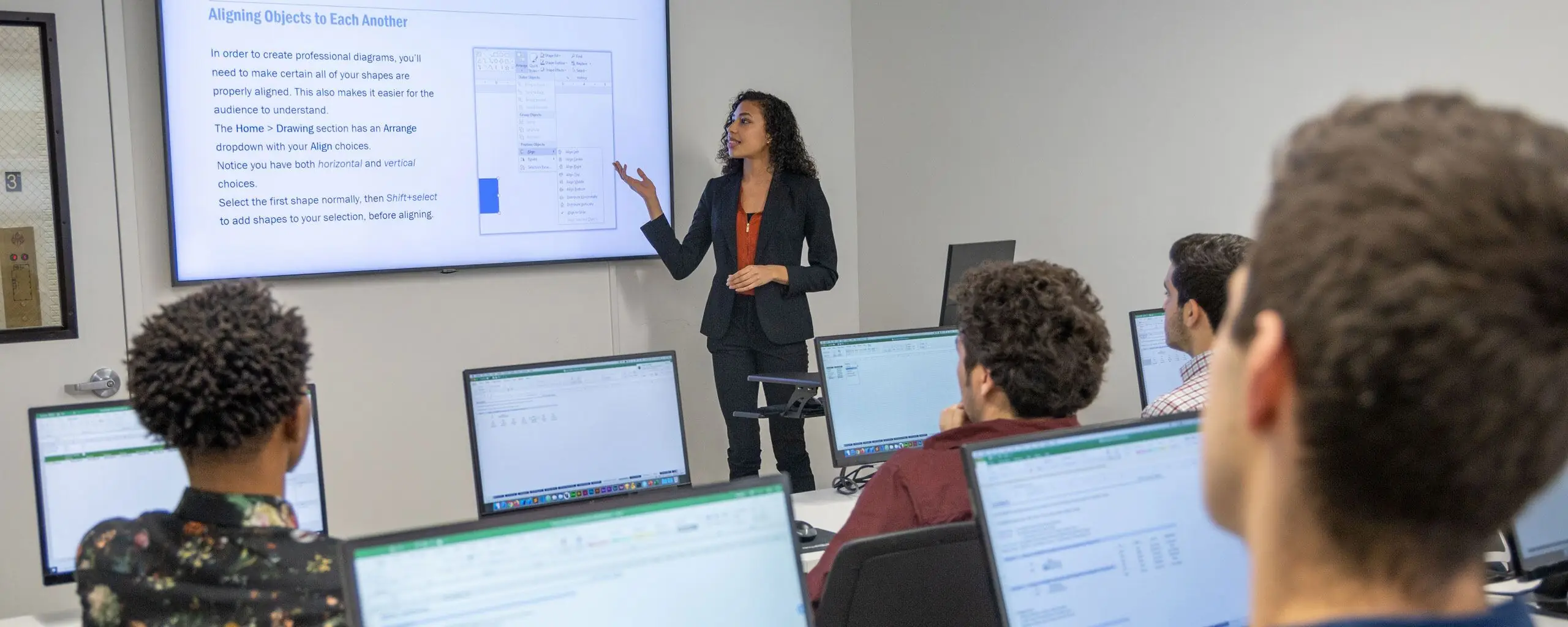
People have the choice of training either in-person or live online for learning skills with editing videos. Anyone interested can find training in a variety of media technologies to help them accomplish their career goals. Live online courses offer the same level of education that a person would get from sitting inside a classroom without having to leave the comforts of home. While there are several online courses available for training in video editing, many people simply prefer learning inside a classroom with their instructor standing right there in front of them.
Some students living in New York City may choose to enroll at Noble Desktop, located at 185 Madison Avenue, for the in-person or live online Video Editing Certificate program that provides training for editing videos that includes creating a demo reel portfolio. Lessons include learning about editing videos using Adobe Premiere Pro, editing audio with Adobe Audition, and creating motion graphics and animation with After Effects. This course aims to help students learn how to work with a variety of media production applications for creating a fluid workflow strategy. Training includes working on projects using Premiere Pro, Audition, and After Effects for accumulating an appealing demo reel portfolio.
Virtual Video Editing Classes
While some people may prefer learning inside a classroom, being able to get to a location after a long day at work might not be an option for everyone. However, there are alternatives for anyone looking for scheduling flexibility when considering further education. People living anywhere may be looking to change careers or enhance opportunities at a current position by learning new skills, but may not feel as eager about getting back out into traffic to find a classroom somewhere in their city. Anyone interested can find training in a variety of media technologies to help them reach their career goals through virtual learning. Live online training offers the same level of education that a person would get from sitting inside a classroom without having to leave their house or apartment.
Learn From Noble Desktop’s Experienced Video Editing Instructors
With more and more companies relying on digital means of communication with consumers, like commercials and social media, video editing is becoming an increasingly useful skill to have. Video editing consists of crafting a compelling story that conveys a clear message. It’s used for entertainment purposes, like film and television, just as much as it is for marketing and educational materials. With this in mind, it’s easy to see why video editing professionals are needed across industries. Essentially, mastering video editing techniques, like color correction and motion graphics, opens doors to careers in media, marketing, entertainment, and beyond.
With so many opportunities to learn video editing, there’s no better time to start than now. If you’re in NYC, check out the offerings at Noble Desktop. Its central location at 185 Madison Avenue in Midtown Manhattan is accessible on foot or via different forms of public transportation, like Penn Station and Grand Central Station. Plus, the facility is modern, equipped with all the necessary software. Further south at 600 Maryland Avenue SW in Washington, D.C., Graduate School USA offers similar courses and a clean, professional facility right off L’Enfant Plaza. It’s a perfect fit for corporate groups or workshops.
In Chicago, at 29 E. Madison Street in the Hayworth Building, class sizes are small, ensuring a personalized learning experience. It’s straightforward to find via CTA transit options and other forms of public transportation. Each of these training centers offers a variety of courses and delivery options, so you can find something that suits your needs.
Jerron Smith
With more than 25 years of experience in graphics and video production, and 20 years of experience as an instructor, Jerron is a great fit for teaching video editing courses. He is an expert in industry-standard tools like Adobe Premiere Pro, After Effects, Photoshop, and Illustrator, as well as other animation tools like Adobe Animate and 3ds Max. Jerron has also authored several books and produced training videos that focus on various types of design software. In addition to teaching at Noble Desktop, Jerron has shared his expertise at institutions such as New York City College of Technology, New York Institute of Technology, and the Fashion Institute of Technology.
Dan Rodney
Dan has spent more than 20 years working as a designer and web development specialist, in addition to creating high-impact coursework and leading innovative training programs at Noble Desktop. In particular, he played a key role in developing Noble’s most recent AI-centered courses and prides himself on providing the best instruction possible, regardless of the subject. Beyond his work in the classroom, Dan also develops custom scripts for InDesign, including tools like “Make Book Jacket” and “Proper Fraction Pro.” In his free time, he dives into automation and learns more about the latest AI technologies.
Stephen MacGillivray
Stephen is a skilled instructor and video editing expert, having earned an MFA in Screenwriting from Columbia University. In addition to his educational accomplishments, Stephen also runs his own production company, Indian Summer Media, where he produces documentary-style films as a freelance Video Editor and creator. He works as an instructor at Noble Desktop, mainly focusing on video editing and motion graphics, but he also works at LREI, a private school in Greenwich Village, where he teaches nonfiction and fiction video production, motion graphics, and introductory film production classes.