Learn More About Practical Programming
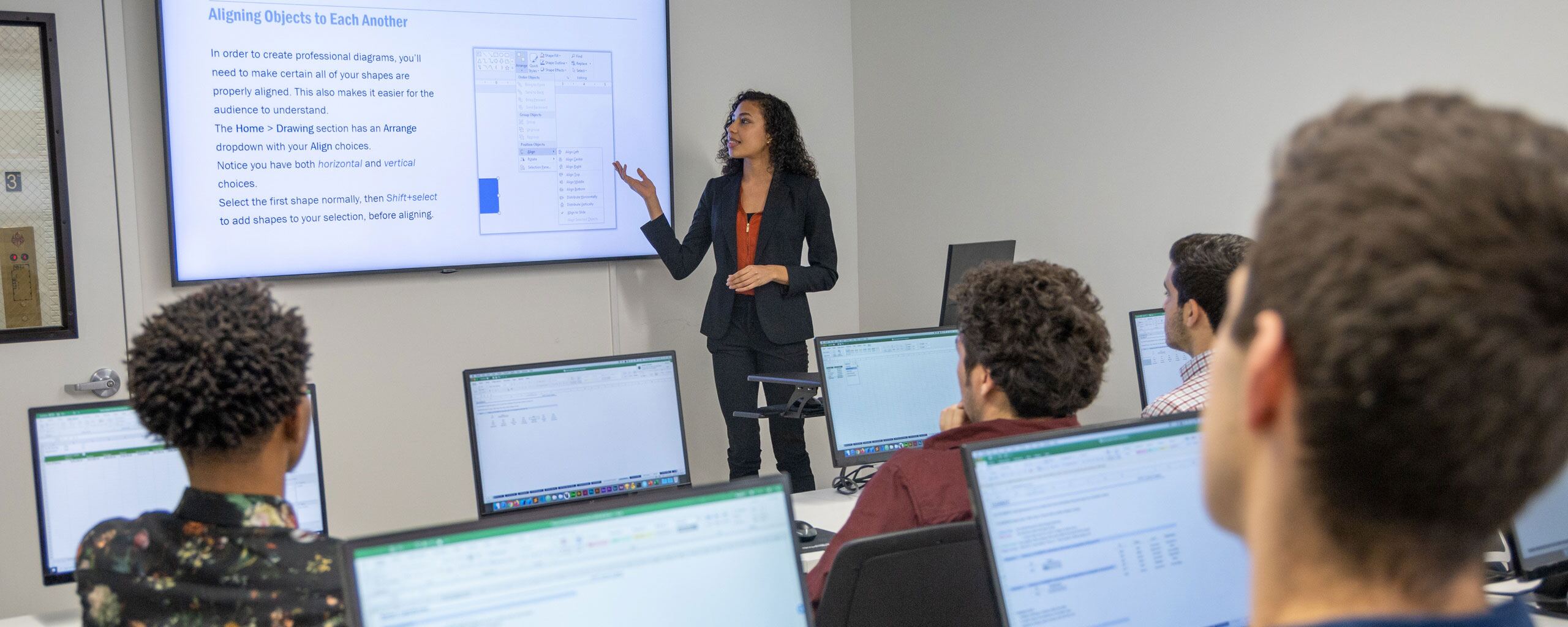
In Practical Programming courses, students can prepare for careers like Data Scientist, Python Developer, Software Engineer, FinTech Professional, and Web Developer, to name a few. The curriculum is focused on hands-on learning, where students have ample opportunities to practice their skills to get a feel for what the working environment will be like. This fosters a highly interactive experience that allows for far more retention of the subject matter than simply following along with hours and hours of lecturing.
School Locations
Practical Programming shares its New York City facility with partner school Noble Desktop. The state-of-the-art campus is located in Midtown Manhattan near Grand Central and Penn Station, which allows for easy commuting by public transit, including the bus lines and subway. For those not located in or near New York City, there are live online courses available as well.
Subjects Taught at Practical Programming
An extensive selection of topics is available through Practical Programming and its partner schools, including coding, design, business, and finance. Practical Programming provides several options in coding and data science, as well as languages within those fields, like Python and SQL.
What Classes Are Available?
Practical Programming’s flagship courses are its bootcamps and certificates, which are longer courses designed to provide comprehensive education and career preparation in the field. While it does offer shorter courses in topics like Python, SQL, and machine learning, the bootcamp and certificate programs are the best choice if you are new to the field and want to get started on a new career path.
One of the most versatile programs available is the Software Engineering Immersive, a 288-hour certificate that includes both front- and back-end languages and frameworks. This means that graduates can pursue specialized career paths as well as broader roles like Full Stack Developer or Software Engineer. Some of the main concepts covered in this course include HTML/CSS, Flexbox, Grid, and Bootstrap on the front end, as well as back-end development through several JavaScript and Python frameworks like React, Node.js, and Django.
For students with a more targeted path in mind, the 84-hour Data Science Certificate or 90-hour Python Developer Immersive might be a better fit, as they still provide career preparation but delve more deeply into these focused specialties. In the data science course, students master Python programming fundamentals and learn to leverage Numpy, Pandas, and Matplotlib for data analysis, queries, and task automation. The developer course also focuses on Python, but is geared more toward its software development uses and back-end coding rather than data analysis and automation.
Another option is the FinTech Bootcamp (102 hours), which is designed for aspiring financial technology professionals. This course delves into Python and SQL through the lens of FinTech, targeting concepts and techniques one would use in a Financial Analyst role or similar position.
Class Formats
Students who prefer in-person courses can find them at Practical Programming’s New York City location. Those who are located too far from New York City to commute, or who simply prefer to attend remotely, can also take any course live online. The formats are fairly similar, with the same time-tested curriculum and course materials offered in both live online and in-person options. One difference is the amenities; remote students will need their own computer and wifi, all of which are included in the in-person courses.
Admissions Process
Signing up for a Practical Programming course is as easy as clicking the “Enroll Now” button on the course(s) you are interested in. You’ll then be taken to a registration page where you can choose your dates and enter any promotional codes, if applicable. From there, you will need to sign in or create a new account to finish the checkout process.
Pricing & Payment Options
The price range for Practical Programming varies based on the subject matter and length of each course. Shorter courses (18 hours and under) range from around $400 to $1,500, while longer bootcamps and certificates can fall within the $3,000 to $10,000 range. Select courses are eligible for discounts or payment plans, though it is important to note that many certificates and bootcamps are already priced at a discounted rate.
Career Support Services
Some of Practical Programming’s certificates (offered through partner schools like Noble Desktop) offer 1-on-1 mentoring to help students with coursework and career preparation. Students can decide what to focus on in their sessions, whether that means working through difficult concepts from their studies or receiving career guidance. For the latter, mentors can help with tasks like creating a resume, building a portfolio, or updating LinkedIn and similar job search profiles.
Alumni Outcomes
At this time, Practical Programming doesn’t track students after they graduate. Alumni outcomes will be different for everyone depending on the course(s) they’ve taken and the career they pursue. You can find some of these individual outcomes by reading the student testimonials, where alumni have written about their experiences taking the school’s workshops and certificate courses.
What Do Students Say?
Reviews and other feedback are a fantastic way to get a sense of the experience at any school. Practical Programming’s average rating on review sites like Yelp and CourseHorse is five stars; most students enjoy their time at the school, whether courses are in-person or live online.
Engaging instruction, effective curriculum, and supportive learning environment are a few commonalities the positive Practical Programming reviews share. Overall, students say that they were happy with the class, and many even mention their intent to return for future training. One graduate stated that his instructor “did an excellent job facilitating the class,” and also went on to say that the “material was at a comfortable pace and easily digestible with meaningful learning reinforcements and assignments. Would take another class from this institution.”
Student testimonials are also highly positive for Practical Programming. A long-time student who has taken many Practical Programming courses stated, “All of the instructors have been great, and the material and its presentation is very comprehensive. So is the style of teaching; it is very easy for me to retain what I’ve learned between and after classes.” This is a widely held sentiment across testimonials; a large number of students mention the high quality of the materials and instruction in their courses.