Learn More About Python Classes in Toronto
Python is a high-level, open-source programming language that was created by programmer Guido van Rossum and first released in 1991. Considered versatile and relatively easy to work with, it is used in a wide variety of fields, including software development, data science, web applications, and machine learning. It can run on many different platforms and has a large and supportive community. Python is one of the most popular programming languages in the world and is used by millions of developers.
What Can You Do with Python Training?
You can do a lot with Python training, since Python skills can be used in a wide range of different tasks and industries. In a GitHub blog article titled “Why Python Keeps Growing, Explained, ” the author stresses, “Python is everywhere—and it’s been used to build a significant number of the technologies, websites, and even systems most people encounter on a daily basis. It powers everything from your favorite video streaming service to the ML algorithms that can help you make your next cryptocurrency trade.” Python is one of the top languages for machine learning and data analysis, used for a variety of different data-related tasks and to train machine learning models. It’s used to perform complex calculations for financial analysis and is a common tool for automation. In addition, this language is very popular for web and software development, where its extensive collection of libraries and frameworks helps developers work more efficiently.
What Will I Learn in a Python Class?
Every Python class is different; however, many classes do cover a similar set of foundational concepts. For instance, no matter what Python class you take, you’ll learn Python. You’ll also learn how to use libraries and frameworks and work with algorithms and data structures. In addition, most classes cover best practices. Finally, you’re likely to improve your problem-solving skills in any class.
The Python Language
When you take a Python class, you’ll learn how to read and write using Python. Like all programming languages, Python has its own syntax, which is a set of rules that govern the way this language is used. Python does have some similarities to other programming languages; however, it is also unique. Some of the other basic language-related concepts you’ll need to master when you’re learning Python include variables and expressions, strings, data types, conditionals, functions, and lists and loops.
Python Libraries and Frameworks
Libraries and frameworks are prewritten collections of code that you can use for certain programming tasks. They can help you work more efficiently by allowing you to skip certain low-level details. They can speed up your work process because they eliminate the need to write every single piece of code from scratch. Matplotlib, Pandas, and NumPy are three popular Python libraries. Django and Flask are popular frameworks.
Data Structures and Algorithms
Many uses of Python involve data structures and algorithms, so you’re likely to cover these concepts in a Python class. An algorithm is a set of instructions that can be used to process and manipulate data. For instance, there are algorithms for sorting and searching. A data structure is like a container that can be used to store and organize data in a certain way. Arrays and trees are examples of data structures.
Best Practices
If you want your Python code to be clean, consistent, reusable, and maintainable, it’s important to use best practices throughout the coding process. For instance, there are numerous Python style conventions. There are also naming conventions to help keep your code consistent and easy to understand. In addition, you should also document your code, keep it organized, and test it regularly.
Problem-Solving
As you learn Python, you’ll improve your problem-solving skills, because problem-solving is a key element of coding. You’ll learn how to simplify complex problems and how to break a problem down into smaller, more manageable elements. As you code, you’ll practice finding different ways to achieve the same results. The debugging process is also an exercise in problem-solving.
How Hard is It to Learn Python?
Python has a relatively simple syntax and is widely regarded as one of the easiest programming languages to learn. However, like any programming language, it is challenging to learn and will take time and practice. If you’re already fluent in another programming language or have any programming experience, you’re likely to find the learning process easier. Some experts advise that, rather than focusing too much on syntax, the best way to learn this language is by using it on projects. If you’re just starting out, you can find some very basic projects to work on.
What Are the Most Challenging Parts of Learning Python?
Many people find that one challenging part of learning Python is mastering object-oriented programming. This is a type of programming that uses objects and classes rather than logic and functions. It can be challenging to master due to its complexity and abstract nature. If you’re struggling with object-oriented programming, it can be helpful to take a live class. With a class, you can learn from an expert, ask questions, and get feedback on your progress.
How Long Does It Take to Learn Python?
The Python learning process is different for everyone, but most people will be able to pick up some basic skills within a few weeks and become fairly comfortable using this language within about six months. Mastering it may take a year or more. The more time you devote to practice, the more quickly you’re likely to learn. If you already have coding experience, you’re also likely to learn more quickly. In addition, it can be helpful to find other people who are learning like you. Learning with others, such as in a Python class, can help you stay motivated and give you access to support, opportunities for collaboration, and a variety of perspectives.
Should I Learn Python In Person or Online?
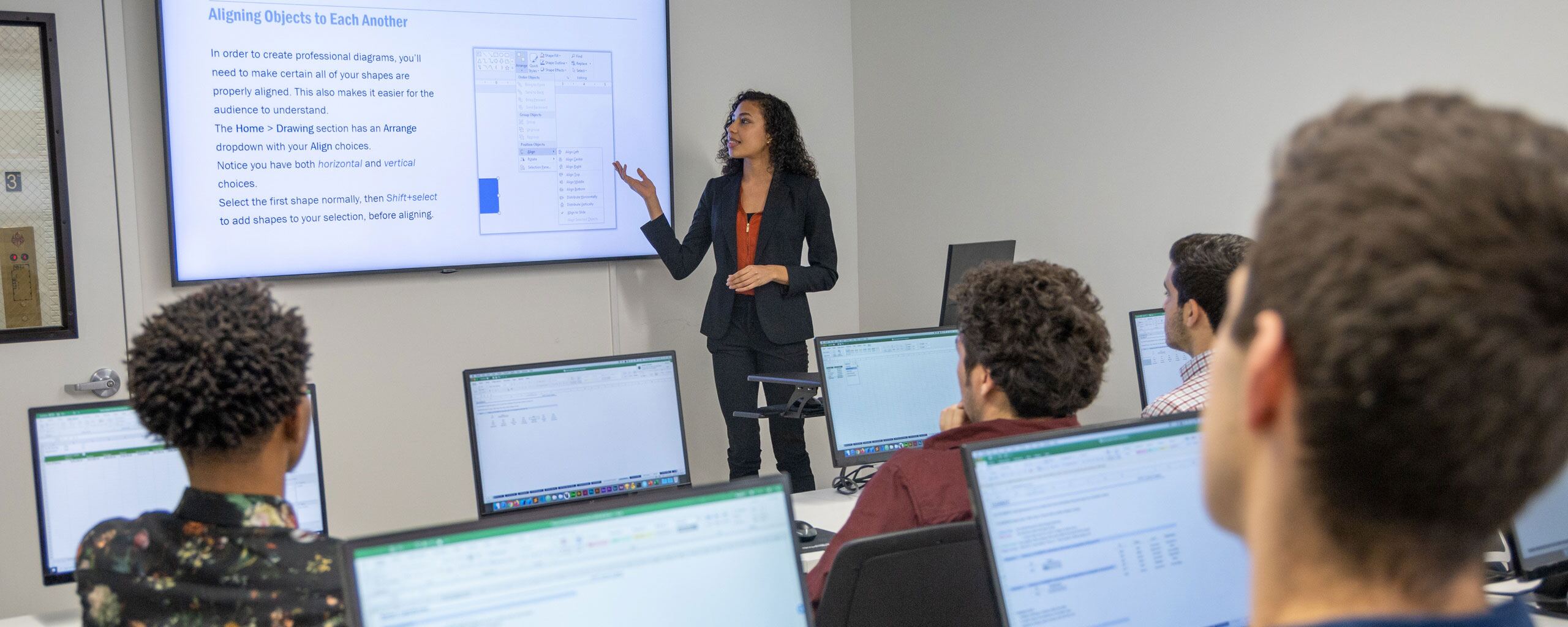
In-person and online classes each have unique advantages and disadvantages, and the decision about which format to choose will depend on your unique situation. In-person classes are the traditional way to learn and remain popular. Students like that they can learn in a distraction-free environment and that they get to interact face-to-face. Some also find the in-person format to be an easier way to master complex topics. A disadvantage of in-person learning is that you have to travel to a classroom. Not only can this be time-consuming, but it means you’re limited to classes that run nearby.
Live online learning is a popular alternative to in-person classes. This type of class takes place in real-time, just like an in-person class, so you still get a live lecture and the ability to ask questions and get feedback. But rather than commuting to class, you attend by simply logging in on your computer. All you need is an internet connection. This provides more flexibility and also means that you’re not limited to classes that run in your geographic location. Unlike in-person classes, however, you’ll need to provide your own equipment and software. In some cases, you may also have to deal with technical problems yourself.
A third learning format is an on-demand class. Unlike in-person and live online classes, on-demand classes are asynchronous, meaning that they are not live. With this format, course material is pre-recorded, and you progress through it as quickly or slowly as you want to. You can even fast-forward or rewind if you need to. On-demand learning is the most flexible way to learn. Because there is no live instructor, it is generally significantly cheaper too. However, without a live instructor, you can’t ask questions or get regular feedback on your work. In addition, because you have so much control over your own schedule, you’ll probably need a higher level of motivation and the ability to work independently.
What Should I Learn Alongside Python?
There are hundreds of programming languages available, and many people find it beneficial to learn multiple ones. The additional languages that you choose to learn will depend on the industry you plan to work in. For example, if you’re interested in data analysis, in addition to Python, you may want to consider SQL and R, which are also widely used in that field. If you want to work in web development, other fundamental programming languages are HTML, CSS, and JavaScript.
In most Python-related jobs, you’ll also need a variety of soft skills like communication, problem-solving, adaptability, and teamwork. In a 2023 article titled “11 Important Soft Skills for Software Developers to Improve, ” Indeed explains, “Software developer soft skills are abilities that enable people to interact well with others in their work environment and complete their work efficiently.” It says, “These differ from technical skills, like writing code and designing user interfaces. While those skills are also important, soft skills can enhance your technical abilities, allowing you to assess the needs of members of your team and organize your plans for designing programs.”
Toronto Industries That Use Python
Finance
Python can be used to analyze and visualize financial data and automate a variety of tasks, and is a popular tool in the world of finance. It is also used to build FinTech applications. These are programs like mobile banking apps and financial management tools that support a variety of financial services. Toronto is the second-largest financial center in North America and is home to some of the largest financial services companies in Canada, from the Royal Bank of Canada to TD Bank.
Technology
Python is a versatile language that can be used to create a variety of different programs and has become very popular in the tech industry. Users like that it can automate tasks, increase efficiency, and streamline the workflow. The tech industry in Toronto is one of the fastest-growing in all of North America and has an incredibly diverse ecosystem. Companies like Shopify, with a major engineering presence in Toronto, use Python extensively for automation, cloud computing, and financial analytics.
Artificial Intelligence
Python has an easy-to-read syntax and many libraries and frameworks, which make it well-suited to a variety of AI-related tasks. It also has a large and active community that programmers can draw on for support. With institutions like the University of Toronto driving innovation in AI tools, it’s no surprise that AI is booming. Many Toronto-based companies, such as the Vector Institute for AI, will use Python for research and deep learning.
Cybersecurity
Python’s simplicity and flexibility also make it a popular choice for cybersecurity. One benefit of using Python for security is that this language has cross-platform compatibility, meaning that when it is used, programs can run on a variety of different operating systems. With the three previously mentioned industries, it’s no surprise that the cybersecurity sector is also growing. Large financial institutions like RBC and TD Bank will hire large cybersecurity teams to maintain security within their apps and digital platforms. Likewise, ISA Cybersecurity, a consulting and threat detection company, uses Python to develop platforms and tools to keep data secure.
Python Job Titles and Salaries
Data Scientist
Data Scientists gather and analyze data to better understand it, solve problems, and provide actionable insights. They also create models and algorithms to help them with that process. Part of this job includes communicating findings with a variety of visualization tools. Data Scientists need math and programming skills and should be intuitive, creative, and good problem-solvers. According to Indeed, the average salary for a Toronto Data Scientist is $98,000. Overall, you can expect a salary ranging from $85,000 to $140,000 as a Toronto-based Data Scientist.
Web Developer
Web Developers create and maintain websites. They meet with clients to understand their needs and work on the design of the site. They also create the site, which usually involves coding, and they also need to implement security measures. In addition, they test and maintain the site. Web Developers are usually fluent in multiple programming languages. They also have strong problem-solving, collaboration, and communication skills. Indeed reports that the average salary for a Web Developer in Toronto is $65,000 yearly. In general, Web Developers in Toronto can expect to earn anywhere between $60,000 and $105,000.
Software Engineer
A Software Engineer builds and maintains software. They work to understand user needs, and they design a variety of types of software applications to meet those needs. This job also involves documenting software, testing it, and maintaining it. Some Software Engineers specialize, for instance, in operating systems or video games. This role requires skill in coding and debugging, attention to detail, and problem-solving skills. A Software Engineer in Toronto has an average annual salary of almost $86,000, according to Indeed. However, a general expected salary could be anywhere from $80,000 to $140,000.
Machine Learning Engineer
Machine Learning Engineers design and create machine learning models, which allow computers to function without human assistance. This job involves researching needs, designing models, building those models, and training them. Machine Learning Engineers also monitor and optimize their models. They need to have strong math, data science, and programming skills. They also need to be skilled in problem-solving, critical thinking, and communication. According to Indeed, the average annual salary for a Toronto Machine Learning Engineer is $130,000, with a typical range of anywhere between $95,000 and $155,000.
Python Classes from Noble Desktop
You can learn Python by signing up for a live online class with Noble Desktop. Noble Desktop is a coding and design school that is based in New York City and offers all of its classes in a virtual format. This school is licensed by the New York State Department of Education, and when you take one of its classes, you’ll get a certificate of completion and the option of a free retake within one year. One of its most popular Python classes is the Python Developer Certificate, which is a multi-week program that will prepare you to work as a Back-end Developer, Software Developer, or Python Developer. In this class, you’ll learn to use Django, Django REST, Git, and SQL. You’ll also learn about dictionaries, custom functions, sorting algorithms, and working with APIs. In addition, you’ll work on projects for a portfolio. The class comes with four one-on-one mentoring sessions. To take the class, you should be able to code with HTML and basic CSS. If you need to learn these skills, Noble Desktop offers a basic HTML and CSS class.
Another Noble Desktop option is the Python for Data Science Bootcamp. This is a multi-day class and is intended to teach you the fundamentals of Python programming and data analysis. In this class, you’ll learn both basic and advanced Python skills. In addition, you’ll learn to structure programs and work with arrays and data frames. This includes using NumPy and Pandas. You’ll also learn many other Python-related skills, including analyzing and filtering data, and using data science libraries. A one-on-one training session is also included. This program will prepare you for a machine learning class.
If you’re looking for a broader education, Noble also offers a Software Engineering Certificate. This is a comprehensive, multi-week course, and is intended for students interested in becoming a Full-Stack Developer or a Software Engineer. You’ll learn front-end development, React Development, and Django (Python) Development. You’ll also learn many different front-end tools, including HTML, CSS, and JavaScript. In addition, you’ll learn how to use Flexbox and Grid for layout and adapting to different screen sizes, and Git for version control. The course also covers JavaScript, including data types, loops, and variables, and you’ll learn about the JavaScript library, React. As part of the course, you’ll create a working desktop application with React and deploy it using AWS. The course includes twelve one-on-one mentoring sessions. You’ll also create a portfolio that you can use to demonstrate your skills to prospective clients and employers.
Python Corporate Training
Python is useful in many different professional roles, and some companies can benefit from training a group of employees in this language. Noble Desktop offers corporate Python training programs, which run in a live online format via Zoom or a similar platform. When you schedule training through Noble, you can choose from existing courses or customize content to meet your unique needs. Noble’s expert instructors have both teaching and industry experience, and they can provide a variety of flexible scheduling options. All courses include post-training support material such as handouts and access to educational videos.
Another popular corporate training option is to purchase vouchers for Noble Desktop’s regularly scheduled group classes. This allows your employees to sign up individually for a class that meets their scheduling needs. Noble offers a discount with bulk voucher purchases. To get more information about corporate Python training options, email Noble Desktop.