Learn More About Python Classes in Miami
Python is a popular computer programming language that is frequently used in website creation, data analysis, and task automation. It is beginner-friendly and easy to learn, so even those who are not programmers can use this language for a variety of tasks. Python is a core programming language for some of the world’s largest companies. Netflix uses it for viewing history and the recommendations page. Google uses it alongside C++ and Java for analytical algorithms and data analysis. Even Spotify relies on Python to manage many of its back-end services. In the years since its inception, Python has developed extensive libraries and frameworks with the help of a robust and active community of programmers and developers who contribute to its growth and provide important updates. The collaborative nature of this language makes it an ideal choice for those who will be working professionally in any technology-related sector, or those who want to build a network around their programming skills. It is an invaluable tool that can be used on projects in any industry.
In the 1980s, Guido van Rossum began work on Python. Named after the old BBC television series Monty Python’s Flying Circus, this programming language was originally a hobby project to keep van Rossum engaged over his Christmas break. Python was released in 1991, and over the next ten years grew significantly in popularity. By 2010, it had become one of the world’s most popular and recognizable languages, with developers highlighting its simplicity and encouraging others to learn it. Today, Python is a go-to language for a wide range of applications. It is a major machine learning (ML) and artificial intelligence (AI) coding language. It’s also regularly used with projects like game development, graphical user interface (GUI), and network programming. Python is considered a cornerstone of software development, so whether you’re a seasoned programmer or someone looking to learn a relevant and influential skill, Python ticks all of the boxes. It’s easy to learn, collaborative, and can greatly improve your marketability, opening up additional job opportunities. Learning Python is a worthwhile investment and can help you tackle the diverse challenges that exist in the wonderful world of technology.
What Can You Do with Python Training?
Python training is an easy way to learn the fundamentals of the programming language. Once you have a working knowledge of how to use it, there are a variety of things that you can do with it. One of the core uses for Python training is software development. Because there is such a rich diversity of libraries and frameworks that can help you write applications, Python is ideal for building web, desktop, and mobile apps. For example, the framework Django helps with rapid web development. FastAPI helps with building web APIs. You can also develop command-line interface (CLI) applications. A CLI allows you to communicate with your computer through text commands. This is opposed to the traditional way of interacting through icons and menus, or graphical user interfaces (GUIs), which Python training can also prepare you to work with. Though you can create games in any programming language, Python is a simple and easy one to start with. Once you’ve learned more about functions, variables, loops, and other foundational Python skills, you can even take on fun projects like developing arcade or puzzle games.
Python is also a great tool for those in data science. Data science is an academic field that uses math, statistics, and programming to analyze and interpret data so that we can learn more about the habits, trends, and patterns of consumers, clients, and patients. With the information Data Scientists collect, businesses can make more informed decisions that will greatly impact their success. Python training prepares you for work with machine learning and artificial intelligence, two valuable tools in collecting and analyzing data. Python as a programming language offers many additional tools that can help with data mining and manipulation. It is an excellent programming language for those interested in web scraping, which is a technique that’s used to pull data from websites. This process is automatic. Python sends requests to webpages and gets their content in response, which allows developers to extract data based on text, links, and images. If you regularly work with data, technology, and science, Python is a great way to learn more about the world around you through the data you compile.
This programming language can also provide a creative outlet for those who do programming as a hobby. Because of Python’s versatility, it can be used on projects in many industries. Game building, storytelling, and even predicting the weather are all possibilities once you know this skill. You can use Python to look over your spending, analyze your movie-watching habits, or poke through your social media posts to learn more about yourself. Some fun projects that are more hands-on include programming a robot or a chatbot, building interactive data-based maps for others to look through, or recreating your favorite board game for computer use. There are websites dedicated to guided projects that Python beginners can tackle, and with the large community of experienced developers who can guide and mentor you along the way, learning Python has never been easier. Whether you’re interested in using it as a form of creative expression, or as an opportunity to advance your professional portfolio, it is an exciting and rewarding skill to learn.
What Will I Learn in a Python Class?
Python skills range from beginner to advanced. Depending on the class, you may learn more fundamental skills like mathematical operations, Boolean types, and dictionaries. There are also lists and loops, functions, and even checking for errors in basic lines of code. Once those basics have been learned, you can begin to write your own code, eventually working your way up to writing full programs. At the more advanced level, a class may teach you about design patterns, algorithms, and more complex data structures like trees and graphs. You’ll have an opportunity to work with popular frameworks like Django or Flask, and may even be introduced to network programming. There are a variety of technical skills and valuable soft skills you can learn that will greatly enhance your abilities as a programmer.
Object-Oriented Programming
Python is an object-oriented programming language. While many software designs traditionally use functions and logic to create their structure and behavior, object-oriented programming (OOP) depends on data and objects instead. We can think of objects as the building blocks that hold important information and allow the software to function properly. In a Python class, you can learn more about the history and expectations of object-oriented programming. It’s also the perfect place to compare Python’s approach to that of other popular object-oriented languages like Java and C++, so that you can gain a better understanding of how OOP is used across different systems.
Basic Syntax
Syntax refers to the written rules of a programming language that allow it to be understood by both computers and programmers. These rules ensure that the language elements’ structure, format, and order are correct. If a coding language’s syntax is incorrect, the computer will not be able to understand the tasks it is expected to complete. Since every programming language follows its own rules, a class can introduce you to those rules that are specific to Python. For example, Python is a case-sensitive language, meaning that certain identifiers are different depending on whether they start with a capital letter or not. You cannot be proficient in Python without knowing the syntax or phrase structure of the language. Without these two things, the code will not be readable, and the program will not accomplish the desired tasks.
Data Types
Data types are an incredibly important concept in programming. They are classifications that show a compiler how data should be used appropriately. Some data types are intuitive. For example, a list represents a collection of items, and a string is a sequence of characters in code. Other data types are less familiar to those who have no programming experience. Boolean refers specifically to values that are true or false, and integers represent whole numbers in code. No matter where you are in your programming journey, a Python class can help you understand the unfamiliar terminology and can walk you through the common data types used by this programming language. You can attend classes that review all data types, from numeric and sequence to mapping and text types. Because understanding data types is essential for writing code that is both efficient and functional, taking a course is a good investment for those looking to simplify this information.
Testing & Debugging
Once you have learned the basics of programming, being able to correct any issues in your code is a useful skill to have. Testing is the process of running your program to make sure it works, and that there are no issues. Debugging is the process of correcting any issues you find. There are industry-recommended techniques for efficiently finding bugs in your code. For example, with Python, one way to check for errors is by using the print() function. You can also use the pdb library, a command-line debugging tool that inspects different lines of code to make sure they’re correct. Double-checking for errors in your program can be a tedious and difficult task if you’re not familiar with the shortcuts that have been developed and tested over the years. Taking a class is a way to not only write your code but also test it in real-time and gain valuable feedback from an instructor who can walk you through how best to appropriately debug your program.
Attention to Detail
Attention to detail is a soft skill that is relevant in any industry, especially programming. Failure to write your code according to specific rules will result in a program that doesn’t work. To create efficient and functional code, programmers must be able to find cracks in even the most minute details. Throughout a Python class, you will work regularly with code that has issues that need to be fixed, and identifying those issues will require a high level of attention to detail. You will encounter complex problems that require careful analysis. More than anything, you will have ample opportunity to work in groups, do peer code reviews, and run other projects that will help you develop a habit of looking more closely at your work. Being cautious with even the smallest details on a day-to-day basis is great for building up your attention to detail and is incredibly useful in both a personal and professional setting.
How Hard Is It to Learn Python?
Python is a highly recommended language for those who are new to programming. Not only is it user-friendly, but thanks to its popularity, there is a large and active community of Python users who can walk you through the tips and tricks that have accumulated over the years, which can greatly simplify the learning process. Though Python is considered one of the easier languages, there are still factors that influence how quickly you can learn it. Having access to resources, materials, and mentors can impact the level of difficulty. Different techniques also require a different level of skill. For example, working with beginner code on simple projects uses a distinct skill set that may not always work with advanced Python projects. Overall, while Python is a relatively simple language to learn, the difficulty depends heavily on the project, experience, or resources of the learner.
What Are the Most Challenging Parts of Learning Python?
There are specific concepts in Python that can be challenging for those with no programming experience. The concept of an object-oriented language is particularly hard for new learners to fully understand without a working knowledge of programming fundamentals. There is also a surplus of libraries and frameworks, which can be overwhelming for new Python users. Finding errors in your code and appropriately debugging them can be a daunting task even for the most accomplished programmers and coders. Though Python has built-in scripts that can assist with this and make the process easier, certain errors might cause significant challenges for those who are not familiar with them, like compiler errors, which are notably difficult for beginners to fix. While Python is a relatively simple language to learn, there are still some components that can cause you quite a challenge.
How Long Does It Take to Learn Python?
The basics of Python can take anywhere from 5 to 10 weeks to learn. At that point, you should be comfortable with things like syntax, variables, functions, and other core concepts. You should also understand what an object-oriented language is and how it compares to other types of programming languages. If you are learning Python for a professional environment or intend to use it to expand your career options, you will need new techniques that allow you to work on complex software development, data analysis, or even web development projects. This process takes longer and can run anywhere from 4 months to 12 months. Even after you have developed those advanced techniques, you will continue to learn on the job. The dynamic nature of Python means that programmers are in a constant state of learning, testing, and developing. Taking a course can introduce you to concepts in an intentional way, which can impact the rate at which you learn. With hands-on experience, and regular opportunities to engage in Python-related projects, you may notice yourself learning much more efficiently, which can put you on the fast track to confidently using Python in any environment.
Should I Learn Python In Person or Online?
Deciding whether to learn in-person or online is a choice that depends heavily on what you’re looking for in a program. There are distinct pros and cons for both formats. An in-person course is the most traditional way to learn and is familiar to many people. Having access to a classroom is great for those who need a distraction-free environment, and who want a space already equipped with all the items they need for that course. Schools often have computer labs, science labs, and lecture halls that help create a focused environment for efficient learning. For subjects that require hands-on practice, having a live instructor is useful for direct feedback. There are some limitations to attending in person, though. For those with mobility or transportation issues, the commute can be difficult. There’s also limited flexibility regarding scheduling. In-person courses are ideal for those who may have distractions at home, do not like the commute, and want fully outfitted learning spaces with all the materials needed to succeed.
The online format boasts different benefits. The first type of online format is live online, similar in many ways to a traditional course and hosted through a platform like Zoom, Google Meet, or Teams. The instructor teaches in real-time, which means that class times are not flexible. However, this format is perfect for those who are unable to make a commute to an on-campus location. You can save money on things like housing, gas, or meals that often come with on-site learning. You also have increased opportunities to meet unique peers and professionals from all around the world, which can be more difficult in on-site classrooms. One consideration for online learning is that you can be more easily distracted. It becomes the student’s responsibility to find a learning environment that works best for them, so taking a course in a location with interruptions can greatly impact not only your grades but your overall ability to pick up new information. There is also a distinct lack of face-to-face interaction. Live online courses are ideal for those who want real-time feedback, but are also looking for more flexibility in terms of accessibility, cost, and networking.
The second online format is asynchronous learning, which is fully online and works through pre-recorded lectures, videos, and assignments. This format requires a lot of self-motivation and time management, as the student is directly responsible for completing their workload on any given day. There is no live communication between participants, and these classes are fully location-independent. With modern technology, there are plenty of digital teaching tools that can simplify the process of learning online. Coursework is generally done through modules that can be rewatched as needed, and can be checked at any time and from anywhere. If live online or traditional courses are not recorded, you often lose access to those lectures once the class has finished. Asynchronous learning not only allows you to view things at your leisure, but you can also submit your coursework at your convenience. Simple lessons can be done quickly. Difficult lessons can be done at a slower pace. This format is ideal for those who want flexibility and enjoy fully controlling their schedule and learning pace, but it may not work for those who need interaction or feedback, or those who struggle with self-motivation and managing a schedule.
What Should I Learn Alongside Python?
When you learn Python alongside other valuable tools, you can improve your programming skills and expand your professional opportunities. Because Python is widely used in data science and data analysis, taking a short course and becoming familiar with either topic can boost your Python skills. Python is also used in frameworks for web development and web applications. Learning what makes a good application or website can be critical to working efficiently with them. An understanding of data structures and algorithms is valuable, as it helps with the problem-solving component of working with programming languages. For those interested in full-stack development, learning HTML, JavaScript, CSS, and other web development languages can enhance your overall marketability and provide you with a better understanding of programming languages.
You will learn how to work with certain developer tools like SQL or Git. A Python course will cover some of the most popular IDEs (integrated development environment software) and code editors like Visual Studio Code, Sublime Text, or PyCharm. There is also Spyder, Thonny, or GNU Emacs, which are easily recognizable names in the programming world. These tools are built for Python development and help you manage your code so that it’s easier to handle. While you will likely be able to manage your code on smaller projects, these tools include building, execution, and debugging options. The more of them you learn, the better equipped you are to handle a variety of projects and choose the tools that are most appropriate for you. Picking up additional IDEs and Text Editors is an overall worthwhile investment.
Miami Industries That Use Python
Over the last few decades, our world has become increasingly dependent on technology. This has led to an uptick in industries that depend on tech-related skills, including programming and coding. Miami’s biggest industry is tourism. With a rich history of hosting travelers, Miami has a vibrant landscape of places to visit and things to do. Tourism relies deeply on technology for promotions and marketing. Being a central location for tourists has also led to a boost in some of Miami’s other largest industries, including international trade, finance, entertainment, and technology. These industries benefit from using many of the tools that programmers and coders can provide, which makes it not only a great place to practice your coding skills, but a great place to work if you’re looking to turn your programming knowledge into a long and successful professional career.
Tourism
Tourism has been Miami’s biggest industry for years. Python’s versatility as a programming language allows it to be used for much of the data analysis that the industry needs to thrive. Learning more about those visiting is vital to providing opportunities that match trends and interests. With the help of Python, programmers can provide web scraping and data aggregation. Web scraping, also known as web harvesting, is when programs pull large amounts of data from online. Because most of the data has no structure or organization to it, aggregating that data and turning it into something that people can make sense of is important. Companies such as Royal Caribbean Cruises, Loews Miami Beach Hotel, and Fontainebleau Miami Beach use Python for analyzing visitor data, tracking trends, and optimizing marketing strategies to improve the tourist experience.
Finance & Banking
Python is widely used in the world of banking, finance, and money. It can assist with risk management, financial modeling, and fraud detection. For example, Value at Risk (VaR) frameworks provide quantitative analysis to calculate financial risks associated with market, operational, or credit actions. Other Python tools help generate reports, automate processes, and work with machine learning for fraud detection. Miami-based financial institutions such as City National Bank, RBC Wealth Management, and BankUnited rely on Python to process large datasets, streamline operations, and deliver secure services to their clients. Programmers in these companies often develop software solutions to automate recurring tasks and make the banking process more efficient and data-driven.
Entertainment
Python is heavily used in multiple facets of the entertainment industry, including video game development, animation, and visual effects. Programmers use Python for scripting, game logic, prototyping, and managing AI behavior, making it essential in production workflows. Companies like EA Tiburon, Riot Games (Miami office), and Universal Music Group Miami utilize Python for game development, interactive media, and social media analytics. Beyond gaming, Python also supports content distribution and marketing by analyzing trends, automating repetitive tasks, and optimizing streaming platforms or digital storefronts. Its extensive libraries, such as Pygame and Pyglet, help simplify the creation of graphics, sound management, and other interactive entertainment components, making Python indispensable to Miami’s thriving creative and digital media sectors.
Technology
Technology and Python have a mutually beneficial relationship. Python would not exist without technology, and we owe some of technology’s most unique operating systems, programs, and opportunities to Python. Battlefield 2, a popular video game, stands as a testament to the versatility of this language. Spotify and Reddit also depend on Python for back-end functionality. Even the most popular search engine in the world, Google, uses Python for its critical infrastructure that helps it run efficiently. Python is currently the most popular choice for programmers and developers, and its flexibility allows you to work on projects from software development to data analysis. There is no one specific use for Python in technology, as it can do a range of things. While you develop your list of personal and professional projects, there is a large number of Python-related libraries and frameworks that can help you simplify those tasks, making Python a valuable tool across various technological domains, whether you’re a novice or an expert.
International Business
Being a hub for tourists, Miami boasts a large number of international visitors on an annual basis. Not only that, but many companies in Miami work internationally or have ties to other places. For those companies that deal specifically with international markets, Python can assist in a range of areas. With Python’s machine-learning libraries, businesses can create predictive models and recommendation systems that build confidence in the customers and allow them to make business decisions that are relevant to their market, no matter where in the world that may be. Python also helps with global collaboration and communication by allowing developers to create communication platforms and automate specific project management tasks. Python’s abilities make it an indispensable tool for businesses looking to thrive in the world of international commerce.
Python Job Titles and Salaries in Miami
Learning Python can expand your job opportunities. As one of the world’s most popular programming languages, adding it to a resume is highly beneficial and can help get your foot in the door to your dream job. Because Python is a general-use language, any industry hiring a programmer can use your skills. While most Python-related jobs will require some experience, how much you need is highly dependent on the role you want to fill. Some of the most common job titles for those with Python experience include those of a Data Analyst, Software Engineer, or Systems Engineer. Even roles that do not require Python can gain something from it. For example, Game Developers have options for which programming languages they use on their projects. With Python’s versatility and accessibility, it is not only highly recommended but also comes with a long and invaluable list of resources that can simplify your work. Over the last few decades, professionals in tech have turned Python into an efficient tool that is useful in a diverse range of jobs and industries.
Data Scientist
Data Scientists are those who organize, categorize, and gain insight from data so that others can use it for personal or professional projects. This position generally requires some form of degree or certificate, with certain companies requesting as much as a doctoral degree. The average salary for a Data Scientist in Miami is $73,000 with one to two years of experience. Once you’ve been in the field for 3-5 years, that average shifts to $85,000 a year. Higher-end earnings can be as much as $129,000 a year, though this income is dependent on experience and qualifications. Data science is a growing field. Job opportunities are expected to increase much faster than in other occupations, making it an ideal choice for those who enjoy working with data, technology, or programming related to these two. Python experience is not required, but is considered a plus, as there are libraries related specifically to statistical analysis that can make a job like data science much easier.
Software Engineer
Software Engineers are those responsible for computer programs. It is their job to work with businesses and find out what the purpose of the software will be. They then design an efficient and effective program accordingly. Software Engineers do a majority of the testing with the help of professionals who can give detailed feedback on the software. The engineers may also work closely with other teams, such as UX/UI Designers and Project Managers, to make sure that the software can be integrated according to the company’s goals and objectives. In Miami, Software Engineers make an average of $89,000 a year but can make up to as much as $152,000 depending on experience and qualifications. As technology continues to evolve, the demand for skilled Software Engineers will continue to grow, making it a good option for those who enjoy working with people and who are particularly interested in the software side of computers.
Full Stack Developer
Those who work in information technology may be responsible for managing either the front-end or the back-end elements of a computer program, website, or application. A Full Stack Developer is someone who works on both. As a Full Stack Developer, you may be managing application interfaces or reviewing website navigation for usability. It is not uncommon for Web Developers, especially Full-Stack Developers, to work with UX/UI teams in a company. This is a growing field, with additional opportunities projected to increase over the next decade. A Full Stack Developer in Miami makes an average salary of $122,000, which is well above the national average. Mid and senior-level positions may offer as much as $194,000 a year. If you are interested in website development and management, becoming a Full Stack Developer may be a great option for you.
Systems Analyst
A Systems Analyst is someone who oversees an organization’s overall technology, making changes and recommendations based on how efficient and effective that technology is. Responsibilities in this role range from analyzing databases to suggesting computer systems based on specific features, requirements, or general recommendations. Systems Analysts generally need a degree or a certificate. This is a growing field and is expected to continue expanding as more technology becomes available and more businesses depend on digital assets. A Systems Analyst in Miami makes an average of $78,000 a year, with higher-end earnings being closer to $100,000. Systems Analysts are great at bridging the gap between what an organization needs and the technology that would best match that. They also work to ensure that the business’s technology is useful, making recommendations if it isn’t.
Python Classes in Miami
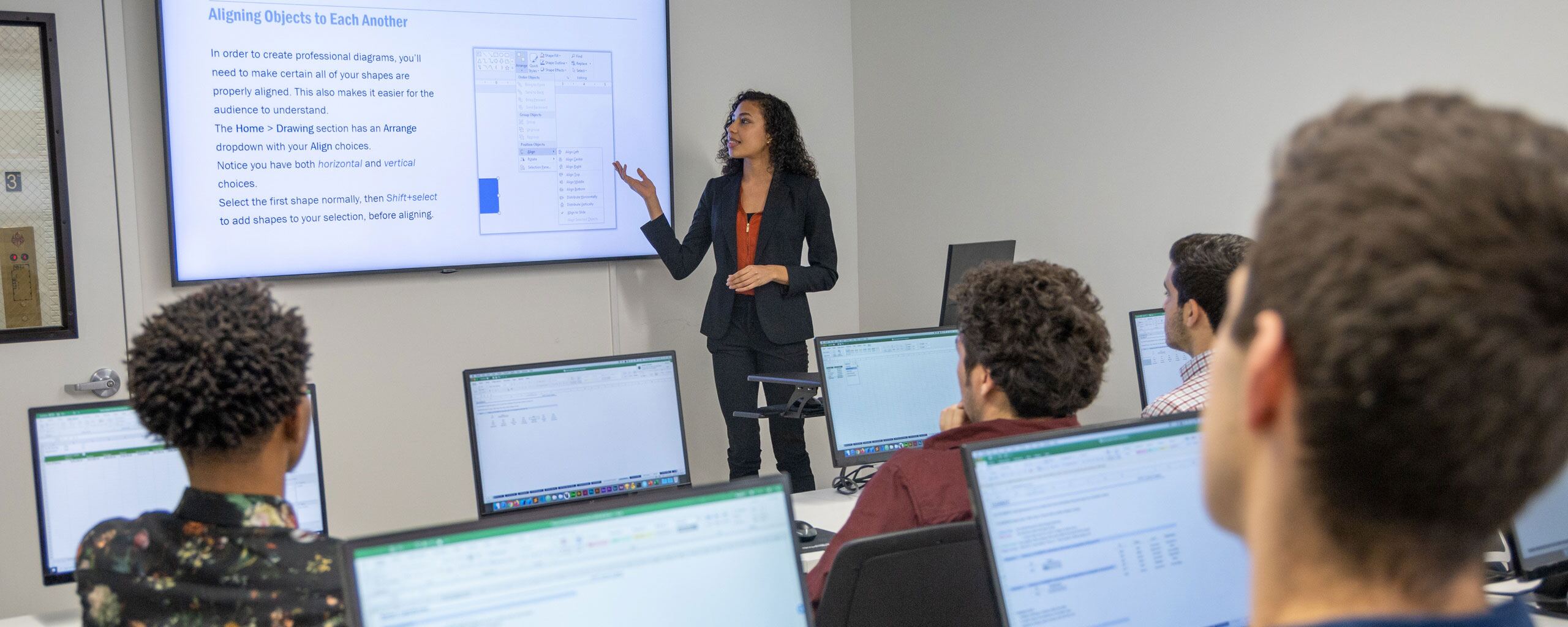
If you are interested in learning the skills needed to become a full-fledged Python Developer, consider Noble Desktop’s Python Developer Certificate. You can learn more about software development with the help of Django, Django REST, and other valuable tools that work with other jobs, like a Back End Developer or Software Engineer. The curriculum first includes a Python Programming Bootcamp, which covers the fundamentals of Python, tech documentation, problem-solving in programming, and a handful of independent coding projects. It also includes a Python web development portion that covers the Django and Django REST frameworks for use in web applications, task automation, and other important tasks. You will leave this program with a project portfolio and a certificate of completion that can be used to enhance your professional opportunities.
If you’re looking for a more specific certificate that heavily relies on Python-related skills, Noble Desktop also offers a Data Science Certificate. This certificate covers data analysis in an accessible way and is beginner-friendly for those who have no prior experience with data science or overall programming. The curriculum covers a unit on Python for data science that reviews data types, object-oriented programming code, and simple data analysis, with an opportunity for you to practice making predictions with the help of programming tools. There are also other segments of the program that cover Python for automation, data visualization, machine learning, and interactive dashboards. By the time you leave this course, you will have a working knowledge of not only Python but also how to use it for data-oriented projects. You will expand your portfolio and build confidence in gaining valuable insight from your work.
Noble Desktop offers a third Python Machine Learning Bootcamp for those who are more interested in the rapidly growing field of machine learning and algorithms. This course covers linear and logistic regression, features and algorithms, and relevant statistical concepts. You can gain practical skills that can be used in any professional machine learning environment. There is a focus on data in this course, and hands-on training with Python as it relates to your machine learning models and algorithms. This course also provides a final portfolio project that can be used for both personal and professional advocacy and can help expand your career opportunities in this field.
For those on more of a time limit, there is a Python for Automation course offered by Noble Desktop that covers the automation of repetitive tasks through programming. You can gain experience with Python’s syntax, scheduled programming, and the identification of common errors when writing your script. By the end of the course, you will be comfortable automating manual tasks and automatically updating Excel files with the help of Python. This course can also act as an introduction to HTML and CSS, and web scraping. It is ideal for those who work jobs that have repetitive tasks. It’s also great for those looking to enhance their knowledge of Python and its use in professional settings.
Python Corporate Training in Miami
If you’re a business looking to train your staff on Python essentials, Noble Desktop offers comprehensive corporate training. These trainings are flexible and can be hosted either in-person or online according to your needs. The in-person location offers a modern computer lab for accessibility, and a dedicated group of industry professionals ready to guide and mentor your team throughout their learning experience. The curriculum is fully customizable, so if you have ideas about what your team must know to be successful, Noble Desktop can work with you to make that happen.
You can choose courses from our existing list for your employees to take at their convenience. This option provides maximum flexibility while also ensuring that your team is learning high-quality content that will help them reach your company’s goals and objectives. Group discounts are also available when you order in bulk. There is a range of topics that are covered, including several Python-specific options. If you’re in the market to upskill your team, contact corporate@nobledesktop.com for more information.