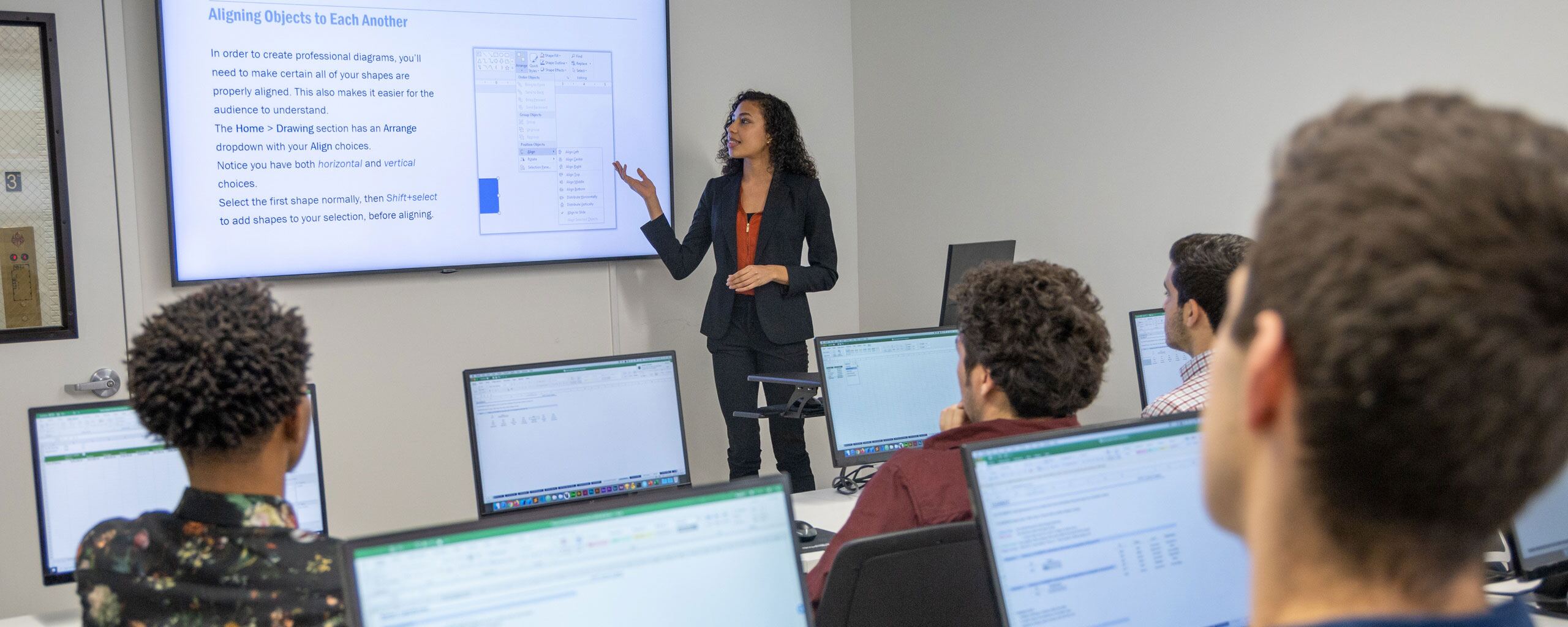
Learn More About Revit Classes in San Francisco
Autodesk Revit is a building information modeling (BIM) software from Autodesk that enables architects, engineers, and construction professionals to design, document, and manage building projects within a unified 3D environment. Unlike traditional drafting programs, Revit uses intelligent, data-driven elements—such as walls, doors, and structural components—that automatically update across floor plans, sections, elevations, and schedules whenever changes are made. This integrated approach enhances accuracy, minimizes errors, and fosters collaboration among project teams. Revit is widely applied in architectural design, structural engineering, and MEP systems, making it an essential tool for planning, visualizing, and executing building projects from concept to construction.
Revit is widely used in the San Francisco Bay Area by professionals like Engineers, Contractors, and Architects to create 3D building models. Autodesk’s headquarters are in the region, which also fuels the prevalence of this industry-standard tool. The job market for architecture, engineering, and construction (AEC) career paths in this region is strong and is fueled by a combination of international design firms, in-house corporate design teams, and tech campus projects. Additionally, the majority of architecture firms and many interior design practices, such as the SmithGroup and HOK, use Revit on projects and require that their Junior Designers, as well as Architects, have training with this software.
Revit training plays an important role in many local engineering firms. For example, Arup and Degenkolb are looking to acquire Revit-proficient BIM Technicians and Engineers to help with MEP and structural design. According to Indeed, corporate clients in the SF Bay Area, including IKEA and Gap, Inc., rely on Revit-trained professionals for their in-house design teams. Large tech companies like Amazon and Google have operations in San Francisco and use Revit for office design and data centers. Salary ranges in this area for Revit professionals are on the high end because of the high cost of living in the area, as well as the need for Revit professionals in many key local industries.
Industries in San Francisco That Use Revit
Several industries in San Francisco benefit from Revit training, particularly those in the building and construction sectors. The following list will take a closer look at how Revit is used in the staple Bay Area industries:
- Structural Engineering: The job market in San Francisco is strong for Structural Engineers with Revit training. There’s an especially high demand for entry-level professionals, as well as senior-level roles that focus on high-end residential construction and remodeling projects. Structural Engineers use Revit to create structural systems and ensure they are coordinated with architectural models.
- Architecture: There are currently nearly 5,600 architecture jobs in the SF Bay Area. In the entire state, almost 21,000 Architects are licensed, and an additional 10,000 more are working toward licensure. In architecture, Revit is the industry-standard tool for tasks like creating elevations, floor plans, and 3D building models.
- Design: San Francisco is known as a major hub for design, especially in sectors like product design and interior design. Design professionals work with Revit to create intricate visualizations and designs depicting interior and exterior building spaces.
- MEP Engineering: Mechanical, Electric, and Plumbing (MEP) Engineers play an essential role in San Francisco by creating energy-efficient buildings, high-tech campuses, and commercial developments. As the local construction industry continues to expand, the need is expected to remain strong for MEP Engineers who know how to use Revit to coordinate plumbing, electrical, and mechanical systems within buildings into a universal design.
- Contracting: Many San Francisco Contractors work with Revit to plan construction projects, provide clients with accurate cost estimates, and schedule work.
- Facilities Management: Revit training helps those who work in facilities management in the SF Bay Area manage existing structures and facilities.
- Transportation Infrastructure: Transportation infrastructure plays a key role in San Francisco to maintain its public transportation systems, like the Muni light rail, cable cars, and regional railways like Caltrain and BART. Revit training is used in this industry to visualize and model various transportation-related projects such as transit and rail systems.
Revit Career Paths and Salary Ranges in San Francisco
The market overview for Revit-related careers in San Francisco is strong. According to Indeed, entry-level Architects who use Revit to create models and drawings earn about $62,000-$72,000 a year, plus benefits. Design Coordinators and Job Captains with Revit training use this knowledge to coordinate BIM models and project documents. They make about $100,000-$110,000 annually. CAD and BIM Technicians create comprehensive Revit drawings and work with BIM files. They earn $65,000-$75,000 as a base yearly salary. MEP and Structural Engineers who use Revit to design systems can expect to make $90,000-$105,000 annually. BIM Managers who oversee digital design workflows using Revit earn $95,000-$105,000 a year.
San Francisco Employers Looking to Hire Revit Professionals
The following employers are interested in hiring professionals with Revit expertise to help their operations:
- Gap Inc. is looking for an in-house Senior Design Manager focused on workplace design who can monitor tenant improvement projects.
- Taylor Lombardo Architects is interested in acquiring a Junior Architect who knows how to use Revit.
- IKEA currently has job posts seeking Retail Store Design Associates who know how to use Revit and AutoCAD.
- Degenkolb Engineers wants to hire entry-level Structural Designers and Engineers with a background in Revit to create building models.
- Gensler, a global design firm, hopes to onboard Interior Junior Designers who know how to work with Revit to create interior layouts and collaborate with Architects.
In the San Francisco Bay Area, BIM practices are being widely incorporated in the construction industry and are especially prevalent in infrastructure and commercial projects. The city is placing emphasis on sustainable construction practices and green building, and BIM software like Revit can help with tasks like energy modeling and energy efficiency. The tech focus in this area is informing construction practices, and project management tools and BIM software are commonplace with Construction Managers. In California, Construction Managers with BIM training are particularly in-demand in San Francisco and Los Angeles. BIM was used in local projects such as the University of California, San Francisco Medical Center, to optimize design and construction. As BIM technology continues to evolve, it is moving toward “connected BIM, ” in which a building model is used in all project lifecycle stages to improve efficiency and collaboration.
Revit plays a key role in the San Francisco AEC industry. It’s an essential tool in BIM practices in the city. When used with BIM 360 Design, Revit is a great resource for worldwide collaboration for large-scale projects (one example is the SFO Terminal 1 project). This technology helps teams located around the globe work with the same project model and keep track of any changes to it in real-time. The San Francisco Bay Area is seeing a spike in demand for life science shells, which are external facilities’ structural frameworks. Revit knowledge is key to creating these structures.
Additionally, as climate change concerns in this area continue to be a consideration in design practices, construction projects are required to adhere to stricter building codes. Revit models and the data extracted from them can be used alongside automated plan review software to ensure all construction work is up to code.
Revit Classes in San Francisco
Revit Fundamentals Course Bundle—Virtual Design and Construction Institute (VDCI)
In the Revit Fundamentals Course Bundle, you’ll build a strong foundation in Revit Architecture and its role in building information modeling (BIM). This self-paced online program includes 60 hours of expert-led instruction, covering essential 3D modeling techniques, architectural design principles, and project documentation. You’ll learn how to create and manage a Revit model, generate 2D construction drawings, and develop workflow, schedule, and presentation graphics skills. With access to professional instructors, hands-on projects, and 1-on-1 training, you’ll gain practical experience to apply Revit in real-world architectural and construction projects.
Revit Certification Training Bundle—Virtual Design and Construction Institute (VDCI)
With the Revit Certification Training Bundle, you’ll gain hands-on experience in Revit Architecture, progressing from beginner to advanced levels. Through a series of five self-paced courses, you’ll learn how to create 3D models, generate detailed construction documents, and apply BIM tools to real-world projects. You’ll also receive an Autodesk Certified User Exam voucher, a free exam retake, and a professional digital credential upon completion. The training includes access to expert instructors, graded projects, quizzes, and a 1-on-1 bonus training session to help you master key concepts.
Intro to Revit—Virtual Design and Construction Institute (VDCI)
VDCI’s Intro to Revit course cuts through the fluff and drops you straight into practical BIM modeling with guidance from architects who actually use this stuff every day on real buildings. You’ll jump right into creating actual floor plans, sections, and 3D views that all update simultaneously – seeing firsthand how changing a wall location ripples through your entire documentation set. The course smartly mixes pre-built starter files with step-by-step video tutorials, letting you focus on learning workflows rather than getting stuck on technical hurdles. With 30-day software access and a verified completion certificate, it’s the perfect toe-dip before committing to more comprehensive Revit training.
Intermediate Revit—Virtual Design and Construction Institute (VDCI)
VDCI’s Intermediate Revit course takes your modeling skills up a serious notch with 89 videos that dive into the stuff employers actually care about. You’ll jump straight into revising existing models, creating custom schedules that extract meaningful data, and building flexible families that adapt to design changes—exactly what separates basic modelers from valuable team members. Instead of wasting time on entry-level concepts, you’re working with pre-built files just like you would in a real firm, with teachers who actively manage commercial and healthcare projects, bringing their daily shortcuts and problem-solving tricks to the lessons.
AutoCAD Certification Program—Noble Desktop
In this program, participants explore a range of beginner to advanced-level AutoCAD topics and skills to prepare to pass the Autodesk Certified Professionals AutoCAD for Design and Drafting test. Students become familiar with basic AutoCAD skills, such as how to work with basic drawing and editing commands, and then progress into more advanced-level training. By the end of this certificate, those enrolled will be able to use higher-level techniques for collaboration, customize their work, and create macros. This class includes a free retake option for up to a year.
Revit Corporate Training in San Francisco
Corporate training is a powerful way to keep your team up to date with the latest design tools and workflows while strengthening collaboration and improving efficiency. Noble Desktop provides customized corporate Revit training designed around your organization’s specific goals. Sessions can be delivered onsite or remotely and feature expert instructors, hands-on projects, and flexible scheduling to fit your team’s needs.
For added convenience, Noble Desktop also offers bulk voucher discounts, allowing employees to enroll individually in scheduled group classes. This approach accommodates different schedules while helping organizations manage costs. Each participant receives expert instruction along with post-course resources, including handouts and access to premium training videos. To learn more about corporate Revit training or to arrange a consultation, contact Noble Desktop today.
Learn From Noble Desktop’s Experienced Revit Instructors in San Francisco
If you’re searching for professional opportunities in fields related to tech, design, business, and data, look no further than San Francisco. The city is a global hub for innovative technologies, startups, and financial institutions, with some big-name companies like Google and Wells Fargo calling the Bay Area home. Revit is an interesting tool that helps architecture, engineering, and construction professionals design detailed and precise plans for an actual building project. In a city like San Francisco, that's constantly growing, it may be worthwhile to learn. Through Noble Desktop’s quality instructors, you’ll be able to start your career in one of these fields quicker than you think. Their combined decades of experience give professionals and aspiring experts the skills that they’ll need to excel in a real-world setting without having to sacrifice hands-on learning. It’s an ideal place to find training that teaches technical skills and practical applications to serve you well in the job search and beyond.
Deanne Larson
As an experienced educator, researcher, and conference speaker, Dr. Deanne Larson brings her industry experience to the classroom, often teaching classes related to data, AI, Python, and project management. Her professional career is exceptional, beginning with her earning three doctorates in Computer Science (AI), International Management, and Management, as well as a Master’s in Business Analytics. Beyond academia, Dr. Larson has also worked in the field of data science and analytics for over 20 years, serving as an advisor to Fortune 500 companies, global enterprises, and FinTech startups through her firm, Larson & Associates, LLC. Her work spans AI-driven strategies, fraud detection machine learning models, and data governance solutions in cloud and blockchain environments. Her extensive training and career accomplishments give her the credibility to impart her knowledge to her students.