Learn More About Coding Classes in Phoenix
Coding, also known as computer programming, refers to the creation of instructions that guide a computer’s actions. With coding, Computer Programmers can build programs like websites and applications.
Programmable devices have existed for centuries, but the first computer program dates back to the 1840s. Early programming languages relied heavily on mathematical notation and obscure syntax, making them highly specialized. Since then, coding has become more accessible and easier to learn over time. Today, coding powers websites, software, and even artificial intelligence.
What Can You Do with Coding Training?
If you want to work in development or data science, you need to know how to code. Development jobs require programmers to work on either web or software development, whereas data science requires the use of coding for data analytics and artificial intelligence.
Web Developers need to know client-side code, such as JavaScript and HTML, if they’re working on the front-end (client-facing) side of a website, and Developers working on the back-end of the website must know server-side code, like Python and SQL. Some Web Developers have skills in both and pursue a career as a Full Stack Developer, working on both the front and back end.
Data science professionals who understand how to work with programming languages like Python and R can become Data Analysts, who analyze data and make decisions. Individuals interested in working closely with algorithms and training computers and machines can pursue a career as a Machine Learning Engineer.
What Will I Learn in a Coding Class?
What you learn in a coding class depends on your career goals. You can opt to enroll in a web development class that will teach you the essentials of web development. These classes are split into front-end, back-end, or full-stack. Or, if you want to pursue software engineering, some classes specialize in the foundations of software development and engineering.
Client-Side Languages
Client-side programming languages are used to develop the portion of the website that visitors see. This includes making the website interactive by adding elements like drop-down menus. Coding classes that focus on front-end web development often teach HTML, CSS, and JavaScript.
Server-Side Languages
Back-end web development courses cover the programming languages needed to present dynamic content that is responsive to user actions and to manage databases. Full Stack Developers need to understand this aspect of web development as well. Coding classes focusing on back-end web development often cover Python, C++, and PHP.
Machine Learning
Enroll in a Python, R, or JavaScript course focused on machine learning to enter the world of artificial intelligence. You can often find coding classes that specialize in machine learning. These courses will walk you through the concept of machine learning before introducing you to the creation of algorithms.
Software Engineering
Software engineering requires you to apply computer engineering to the creation of software. In a software engineering course or bootcamp, you’ll learn how to use coding for both front-end and back-end development, and JavaScript programming, to help build desktop applications.
Communication
Aside from technical skills, coding classes will cover soft skills that you’ll need to start a career in coding. Most coding careers require teamwork. Programmers and developers often work with their colleagues on projects to develop websites, software, and other products. To succeed in the field, you must understand how to communicate your work to your team and upper management.
How Hard Is It to Learn Coding?
Learning to code takes time. The level of difficulty of learning to code depends on why you’re learning to code. If you’re interested in web development, you can opt to learn client or server-side code. Programmers often view client-side languages like HTML and CSS as easier to learn than server-side code like PHP and C++. If you need to work with databases, you’ll likely need training with SQL, and if you want to enter the field of machine learning, you’ll need to understand and know how to write algorithms. It’s important to consider what you know and what you need to know before learning to code. Take your time and don’t try learning too many skills before understanding the fundamentals.
Once you’ve chosen the programming language you want to learn, it can take around six months to a year to become skilled in that language. Most difficulties you face will occur early on in your learning journey, as you work to understand the basics and improve your problem-solving skills.
Should I Learn Coding In Person or Online?
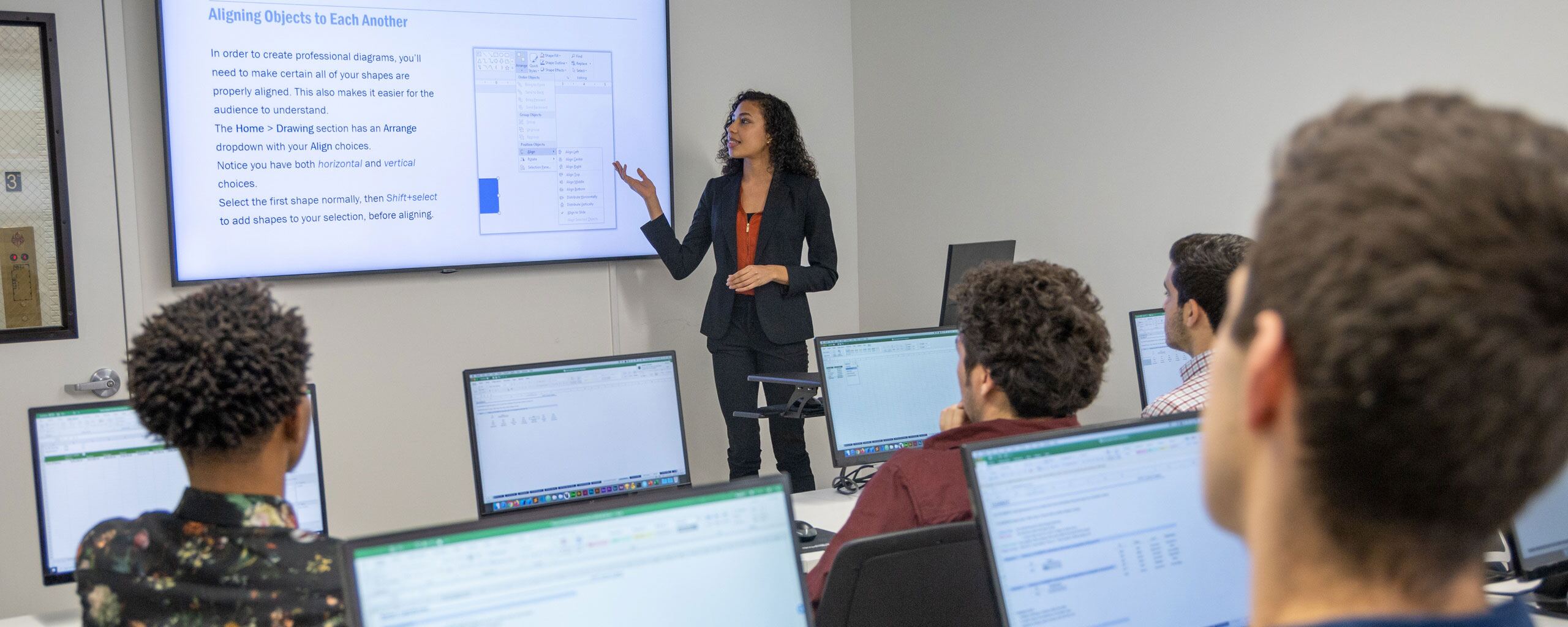
Looking to enroll in a coding class? You have the option of taking a class in person or online. In-person classes take place at training schools in a traditional-style classroom or computer lab. Students will either have access to computers or bring their computers to class, where an instructor will guide them through lessons and aid them in projects.
Online classes come in two modalities: live online and asynchronous. Live online classes allow students to learn remotely as they’re held over a video conferencing platform. This class style eliminates the need to commute while still offering the same level of training as an in-person class. Asynchronous classes do not involve live teaching and instead provide learning materials to students so that they can learn independently. This learning method works well for students with busy schedules and the motivation to learn on their own.
What Should I Learn Alongside Coding?
Programmers and developers rely heavily on coding for their work. However, other professionals, like Data Analysts and Data Scientists, also code. In addition to understanding programming languages, they must know how to create data visualizations and perform data analysis.
If you’re interested in a career as a data science professional, it’s recommended that you learn data visualization and analysis alongside coding. You can use R, Tableau, and other tools to create data visualizations. Once you understand how to interpret data, you can rely on the visualizations you have created to perform data analysis. Companies and organizations hire individuals with these skills to help them make decisions related to marketing, finances, and operational efficiency.
Phoenix Industries That Use Coding
Individuals in the Phoenix area looking to put their coding skills to work can look to some of the city’s most prominent industries.
Financial Services
Phoenix’s financial services industry plays a major role in the city’s economy. It is the sixth-largest financial capital in the country, and several financial giants operate there, including American Express, Wells Fargo, and Western Alliance Bank. This industry relies on coding to build and maintain electronic trading systems, perform qualitative and quantitative analysis, and manage complex financial platforms and databases.
Tech
For over 70 years, the Greater Phoenix region has cultivated a diverse tech ecosystem. Major employers such as Intel, Honeywell Aerospace, and GoDaddy anchor the area’s technology sector, while over 800 software companies and growing startups benefit from access to a talented pool of university graduates. Coding is central to this industry, with roles like Computer Programmers, Software Engineers, and Data Scientists driving innovation in software development, high-tech manufacturing, and next-generation technologies.
Trade, Transportation, and Utilities
Arizona’s abundant renewable energy sources and modern transportation infrastructure attract companies to the region. Firms such as SRP (Salt River Project) in energy, Uber and FedEx for logistics and transportation, and Valley Metro for public transit utilize Software Engineers and Data Analysts to develop routing and mapping applications, optimize operations, and analyze market data, supporting efficient and sustainable business practices across the state.
Coding Job Titles and Salaries in Phoenix
With coding skills, you can turn toward several career opportunities depending on your specialties.
Web Developers have the option of pursuing front-end, back-end, or full-stack web development. Front End Developers know front-end coding languages like HTML, CSS, and JavaScript. They know how to use JavaScript frameworks and libraries, as well as developer tools. The average annual salary for a Front End Developer is $113,000.
Back End Developers use programming languages such as PHP, Java, and Python to provide the server-side of a website, including web services, integration of the front-end, and testing. The average annual salary of a Back End Developer is $157,000.
Those with knowledge of both front and back-end web development can pursue a career as a Full Stack Developer, where they’ll work on both front-end and back-end tasks. To qualify as a Full Stack Developer, you must thoroughly understand applications from end to end. This means knowing basic front and back-end languages and understanding Scrum, whiteboarding, and the software development cycle. Full Stack Developers in Phoenix make an average annual salary of $106,000.
For individuals with management experience, consider a career as a Software Project Manager. This role requires extensive project management and benefits from a skilled worker with high energy, organization, and communication skills. Software Project Managers in Phoenix earn an average annual salary of $64,000.
Coding Classes in Phoenix
Noble Desktop’s Software Engineering Certificate will teach you the essentials of front and back-end web development during the 20-week full-time live online course. The curriculum includes HTML and CSS for web development, as well as JavaScript and Python. At the end of the 20 weeks, students will take home a professional portfolio of projects and the skills needed to secure a role in software and web development.
Noble Desktop also offers a Python for Data Science Bootcamp. In this course, you’ll master the fundamentals of Python programming, begin using the language for data analysis, and cover the basics of machine learning. Students who enroll in this course will receive 30 hours of hands-on instruction while working on real-world projects.
The Noble Desktop Full-Stack Web Development Certificate is a comprehensive program that equips students with all the essential skills needed to become a Full-Stack Web Developer. Through hands-on training, students master front-end development using HTML, CSS, and JavaScript, while also learning back-end programming with Node.js. The program teaches crucial developer collaboration tools like git and introduces modern web technologies such as Flexbox, grid, and Bootstrap for creating efficient, responsive websites.
Coding Corporate Training in Phoenix
Looking to enroll your employees in coding classes? Noble Desktop provides corporate training for organizations that would like their teams trained in coding. Noble provides training in SQL, Python, HTML, CSS, data science, and other languages and programs. Training is available live online or onsite at your offices. The curriculum is customizable, or you can choose from existing courses.
Group class vouchers are available in bulk at a discounted price. This option allows you to choose the courses available to your employees, who may then schedule them at their convenience. For more information on corporate training with Noble Desktop and to explore the options available to you, contact corporate@nobledesktop.com for a consultation.
Learn From Noble Desktop’s Experienced Coding Instructors in Phoenix
Phoenix professionals have a lot of opportunities when it comes to expanding their knowledge in fields like tech, design, business, and data. Anchored by major businesses in downtown Phoenix and the surrounding areas, such as Tempe, Mesa, and Scottsdale, the city benefits greatly from a diverse economy that spans industries ranging from local government and education to tech and finance, all while maintaining strong connections to the global market. Coding is one skill that gets you through the door of nearly any Phoenix industry, as every company needs someone who can analyze data, develop software, build websites, or enable cybersecurity measures. Through Noble Desktop’s network of professional instructors, students in Phoenix can access high-quality training that helps them meet the industry standard. With decades of combined experience, these instructors go beyond the basics and blend practical guidance with real-world insights. This helps students not only acquire technical skills but also the confidence to make it in their professional careers.
Deanne Larson
Dr. Deanne Larson is a data science and analytics expert with 20 years of experience and counting. She has worked as an advisor for Fortune 500 companies and FinTech organizations through her firm, Larson & Associates LLC. Throughout her career, she has been drawn to work with AI-driven strategies and initiatives, machine learning implementation, and customer data platforms. Additionally, Dr. Deanne has worked on fraud detection models and managed global personalization platforms that have served hundreds of millions of customers. She is also a knowledgeable instructor, having worked for City University of Seattle, where she mentored doctoral students and developed curricula in data and business analytics. Dr. Deanne currently teaches courses in subjects ranging from data and project management to AI and Python.
Geno Sexton
After 34 years of federal service, Geno Sexton retired in 2012 and now works as a Phoenix-based project management instructor. Throughout these decades, Geno worked for eight years in the Senior Executive Service, culminating as Deputy Chief Human Capital Officer and HR Director at the U.S. Department of Labor, where he led 120 HR professionals serving 18,000 employees. He was named Deputy CHCO of the Year in 2011 and served as the first HR Officer at the new DHS Headquarters. In his distinguished career, Geno has made a real impact and currently teaches project management courses. He is a Vietnam-era Army veteran, holds a Bachelor’s degree in Journalism and Mass Communications and a Master’s degree in Government from New Mexico State University, and is a proud bilingual and ESL-certified instructor.