Learn More About SQL Classes in Virginia
Structured Query Language (SQL) is a programming language used for communicating with relational database management systems. It was created in the 1970s by IBM researchers Donald Chamberlin and Raymond Boyce and has grown incredibly popular as more and more companies rely on the data collected in large databases. Stack Overflow’s 2024 Developer Survey shows that SQL is the fourth most commonly used programming language. It has many different types, or “flavors, ” including SQL Server, PostgreSQL, MySQL, SQLite, and Oracle. While each flavor subscribes to the same syntax, they have different functions available to address specific data types.
What Can You Do with SQL Training?
With SQL training, you’ll be able to work with data from relational databases, performing queries, aggregating functions, manipulating data, and building tables. Understanding SQL will allow you to analyze data effectively so that you can obtain high-quality results. In an Indeed article titled “18 Key Data Analyst Skills To Get You Hired in 2024, ” the author rates SQL as the number one technical skill needed for working in data analysis. He comments, “SQL is a valuable tool for data analysts, so knowledge of its functionality is key.”
What Will I Learn in a SQL Class?
Most SQL classes start by introducing you to the unique syntax associated with this language. You’ll learn how to use a variety of different commands, such as SELECT, INSERT, UPDATE, and DELETE, to accomplish specific tasks. A class will also cover queries, which are statements that tell a database to perform a specific action. Queries can be used to filter data based on specific conditions. In addition, an SQL class will cover a variety of more advanced skills, such as using joins to combine data from multiple sources and using aggregate functions to apply mathematical operations. In most classes, you’ll work on a variety of real-world projects to help you master your new skills. Finally, when you learn SQL, you’ll develop several soft skills such as critical thinking and problem-solving.
How Hard Is It to Learn SQL?
A lot of people find it easier to learn SQL than some other programming languages because of this language’s relative simplicity and the fact that many of its keywords mean the same thing as they do in English. In an article titled “10 Uses of SQL (With Definition, Benefits and Examples), ” Indeed states, “Even professionals who have little to no coding background could learn the basics of SQL as a result of its simple syntax.” The more time you devote to practice, the easier you’re likely to find the learning process. Practice helps solidify new concepts and identify areas where you need additional review.
How Long Does It Take to Learn SQL?
Everyone learns SQL at a different pace; however, many people say that it’s possible to learn the basics within a few weeks, while mastery is likely to take months. If you’re already fluent in another programming language, you’re likely to learn more quickly. Having data analytics skills can also be helpful. If you want to speed up the learning process, you can try enrolling in a formal SQL class, where you’ll be guided through a comprehensive curriculum by an expert. Many people find that the feedback and accountability that come with a class help them learn more quickly.
Should I Learn SQL in Person or Online?
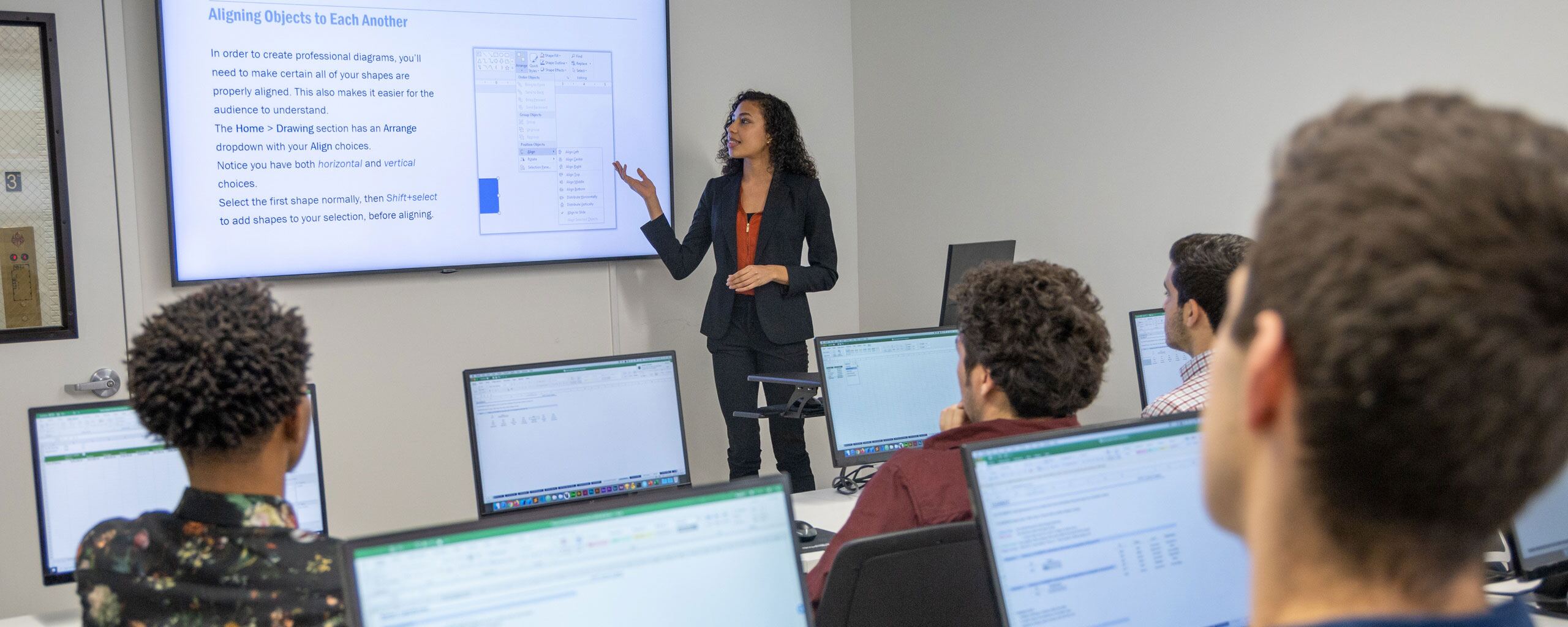
If you’re trying to decide between an in-person and online SQL class, you’ll need to consider the unique advantages and disadvantages of these two types of classes. In-person classes take place face-to-face. Some people find this format more engaging and interactive and say that it’s an easier way to learn new technical skills. Proponents of in-person learning also like that it’s easy to interact and network with other students, and that they can get immediate feedback and answers to questions. A disadvantage is that students have to commute to the classroom and can only choose from class options nearby.
Online learning may include more class options since there is no commute. This means that you can enroll in a class in another city or state. If you choose to take a live online class, you’ll still get a real-time lecture, the opportunity to ask questions and get immediate feedback, and the ability to interact with other students. A disadvantage is that you’ll have to provide your own equipment and software, and you may face more distractions, depending on where you decide to learn from. Another online class format is an on-demand class. The biggest advantage of taking an on-demand class is the flexibility—you can learn at your own pace, stopping and starting whenever you want to. The biggest disadvantage is that on-demand classes are not live, so you won’t be able to communicate with the instructor in real time.
What Should I Learn Alongside SQL?
SQL is used in the field of data analytics, so if you’re learning this language, it can be beneficial to learn additional data analytics skills. For instance, you might want to take a statistics class, since statistics is an integral part of this field. There are also several other programming languages commonly used in data analytics, such as Java, R, and C#, and it can be helpful to learn one of these. Many people say that after you’ve learned one programming language, learning another is easier. Finally, you might want to consider learning about data analytics platforms such as Power BI, which are also common tools for individuals who work with data.
Virginian Industries That Use SQL
According to a recent report by Virginia Works, the top five industries in this state are health care and social assistance; professional, scientific, and technical services; retail trade; accommodation and food services; and manufacturing. All of these industries utilize databases, meaning that they all offer opportunities in SQL. The tech field also offers many SQL opportunities. According to the Virginia Economic Development Partnership, Virginia has a thriving tech sector. It states, “Thousands of tech firms and tech industry leaders have been attracted to Virginia by its combination of diverse, world-class talent, exceptional quality of life, attractive business climate, and competitive costs.” According to this organization, Virginia has the highest concentration of tech talent in the country, with 330,000 people working in tech occupations.
SQL Job Titles and Salaries in Virginia
Data Scientist
Data Scientists collect, organize, and analyze data. Because virtually every industry is reliant on data and understanding the meaning behind data, these professionals are in high demand. They can work virtually anywhere, from healthcare networks like Inova Health System across the Northern Virginia region or in the real estate industry at CoStar Group in Richmond. The Bureau of Labor Statistics (the BLS) is a federal agency that publishes U.S. labor market data. It predicts 36 percent growth in data science jobs over the next decade, with more than 20,000 job openings each year. In Virginia, the average yearly salary for a Data Scientist is $131,000, according to Indeed.
Financial Analyst
Financial Analysts analyze financial information to help businesses make better decisions. Between 2023 and 2033, the BLS predicts 9 percent job growth in this field, with more than 30,000 job openings each year on average. This demand is especially high in Virginia, with finance giants like Capital One and Navy Federal Credit Union headquartered in the Northern Virginia region. The average Financial Analyst salary in Virginia is $87,000 per year, according to Indeed.
Software Engineer
Software Engineers develop, test, and maintain software. The BLS predicts that over the next ten years, jobs in this field will grow by 17 percent. Many Virginia-based companies, like government contractors Booz Allen Hamilton and Northrop Grumman Corporation, hire Software Engineers to develop and maintain their complex systems and platforms. In Virginia, the average salary for a Software Engineer is $104,000, according to data provided by Indeed.
Database Administrator
Database Administrators design, build, create, and maintain databases. They are also responsible for database security. Between 2023 and 2033, the BLS projects 9 percent job growth for this field, with 9,500 new jobs each year on average. It finds that the highest-paid industries for Database Administrators are computer systems, finance and insurance, management, and information. It also reports that Virginia has one of the highest concentrations of database administration jobs. On the government side of things, Database Administrators work for local governments, like the City of Richmond Information Services Department, to support relational database systems. According to Indeed, the average yearly salary for a Virginia Database Administrator is $111,000.
SQL Classes from Noble Desktop
Noble Desktop is a coding and design school that was founded in 1990. It offers in-person classes at its New York City campus, in addition to classes in a live online format. If you want to learn SQL, it offers an SQL Bootcamp. This is a multi-day class where you’ll learn how to write queries, join tables, and aggregate data. You’ll also learn how to filter data and group it. The course covers PostgreSQL and the free DBeaver app. It comes with a certificate of completion and a one-on-one training session. You’ll also have the option of doing a free retake within one year.
Another Noble Desktop option is the SQL Server Bootcamp. This course is a combination of Noble’s SQL Level 1,2, and 3 classes. You’ll learn how to write SQL queries, filter data, and group it. You’ll also learn advanced techniques, including using aggregate functions, subqueries, and functions with parameters and stored procedures. The course also covers Microsoft SQL Server and SQL Server Management Studio. In addition, you’ll receive a one-on-one training session. Noble Desktop is licensed by the New York State Education Department.
You can also learn SQL as part of a longer, more comprehensive data analytics class. For instance, Noble Desktop runs a multi-week Data Analytics Certificate, which is designed to give you the skills you’ll need to work in data or business analytics. In this course, you’ll learn to use SQL, in addition to many other data analysis, data visualization, and statistical analysis skills. You’ll also work on several real-world data analysis projects, where you can practice gathering, wrangling, analyzing, and visualizing data. This course comes with eight one-on-one mentoring sessions.
SQL Corporate Training
SQL expertise can be beneficial to many different types of companies. Noble Desktop makes gaining that expertise easy with its onsite and virtual SQL corporate training classes. Experienced instructors can customize a curriculum that meets your needs and offer a variety of flexible scheduling options. Participants also receive support materials to help reinforce what they learn in class.
Alternatively, you can purchase vouchers for Noble Desktop’s regular group classes and let employees enroll individually. There is a discount for bulk voucher purchases. To get more information about corporate training options or to schedule a consultation, contact Noble Desktop.
Learn From Noble Desktop’s Experienced SQL Instructors in Virginia
Virginia’s professional community is, without a doubt, an impressive one. The state is home to some of the largest companies in the world, and with its proximity to the nation’s capital, its connections to the government and public service sectors are undeniable. Needless to say, those looking to gain new skills in tech, data, business, or design are well-positioned to do so.
Virginia students can take classes at the modern facilities located at 600 Maryland Avenue SW, Washington, D.C., 20024. This is right off L’Enfant Plaza. It’s a professional yet welcoming environment that allows students to jump right into their studies. If you’re coming from Virginia, you’ll have no trouble getting here. While the trip will depend on where you’re coming from within the state, those in the Northern Virginia (NOVA) region can hop on the Virginia Railway Express to Union Station and take the Metro for a short ride to L’Enfant Plaza. Driving is still an option, with various parking garages available to make the trip easier. Otherwise, there are bus routes connecting from NOVA to D.C. With so many options, attending classes and workshops in D.C. is convenient and simple.
SQL supports the databases behind many of Virginia’s corporate, government, and cybersecurity operations. With this, Noble Desktop strives to teach students practical querying and data-handling techniques used in real professional environments. The school's instructors offer decades of experience and insight into the field that enables you to make a real difference in the Old Dominion.
Brian Simms
A seasoned educator and training leader, Brian brings ample experience to the classroom, particularly in designing and delivering learning programs in project management and emerging technologies, like AI. He has created adaptive learning models that blend instructor-led lessons, live experiences, and self-paced study, making professional development flexible and accessible to everyone. Brian has also focused heavily on integrating AI into training, which helps organizations and professionals by applying AI to real-world situations that can fix challenges, assist leadership, execute projects seamlessly, and make more informed decisions. Beyond teaching, he has led curriculum development, managed large-scale training initiatives, and implemented collaboration tools that have led to higher retention rates and increased engagement from students.
Clarissa Corbin
Clarissa has over 25 years of experience as a corporate trainer, Project Manager, and Business Consultant. She has designed and delivered highly effective training sessions for federal agencies, private corporations, and international organizations, making her a well-versed and experienced trainer and educator. She is currently the President and CEO of Projections Training Solutions, which has trained over 10,000 professionals worldwide, including clients like the Department of Defense, NASA, Microsoft, and FEMA. Not to mention, her work has taken her to places like China, Japan, South Korea, Africa, Singapore, and the Caribbean. Her programs span subjects like leadership, project management, business analysis, and emerging technologies. At Graduate School USA, Clarissa is a trusted and well-respected instructor who teaches and helps develop several programs.
Alan McCain
As a retired combat veteran who served as both an Air Force enlisted member and a Navy officer, Alan brings more than 30 years of experience across federal and commercial sectors. His background consists of work in budgeting, auditing, programming, operations, global logistics, supply chain management, and IT acquisitions. He has worked extensively with federal, state, and local governments, such as the Executive Office of the President and various departments (such as the State, Defense, Health and Human Services, and Education Departments, to name a few). Alan’s consulting work includes strategic planning and business development with the D.C. government, federal agencies, Lockheed Martin, and more. Overall, he’s a well-equipped educator due to his experience and expertise, but he also holds a teaching certification from Harvard’s Bok Center for Teaching and Learning. His expansive background makes him a perfect fit to teach subjects like finance, accounting, and project management.
Johnny Cahn
With more than fifty-five years of experience in federal and non-profit financial management, Johnny is a retired senior Federal Manager and Vietnam combat veteran. His degrees are from Herbert H. Lehman College and St. John's University. He has been working as an adjunct faculty member at the Graduate School USA since 2011, teaching Appropriations Law, as well as a range of federal budget-related courses, including finance and accounting. His career also includes leadership roles, such as the Chief of Budget Execution for the IRS Office of Chief Counsel and the Budget Officer for the Small Business Administration’s Office of Inspector General. His impressive career experience and education allow him to share his wisdom with others, fostering a supportive and structured learning experience.
Charles Byrd
Charles Byrd is an experienced Employee and Labor Relations Consultant with a strong background in federal human resources management and legal counseling. He obtained his B.A. in Business Administration and Political Science from Loyola University and received his Juris Doctorate from the University of Baltimore School of Law before diving further into his career. Over the years, he has advised agencies on complex HR and labor matters, managed HR programs, and represented organizations in legal proceedings. In addition to this, Charles has developed and delivered specialized training in subjects like project management and human resources. He has been recognized for his professional excellence as well as his teaching abilities and leadership skills, acquiring awards and accolades throughout his decades-long career.
Natalya Bah
Natalya has been a part-time instructor at Graduate School USA for over 15 years, where she teaches project management, leadership, and human resources courses. She has developed original curricula, including Change Management Workshops and specialized project management programs. In addition, Natalya has served as an action learning coach and facilitator in government leadership initiatives. She runs her own consulting business, offering coaching and training for public and private entities. Moreover, she created the Define and Achieve Your Goals Process and is a certified Birkman Method Consultant. Her M.S. degree in Project Management from George Washington University’s School of Business provides her with the credibility and skills that have allowed her to excel in this field for so long. Between her experience and knowledge in the field, she’s well-equipped to provide insight into the project management field.